

A leaking bidet spray hose is a common toilet problem in Malaysian homes, condos, rental units, and shop lots. Sometimes the leak is only a few drops near the hose connection. Sometimes water keeps spraying or dripping until the toilet floor stays wet.
Before buying a new bidet spray set, check where the water is coming from first. The problem may be the hose, the rubber washer, the spray head, or the angle valve at the wall.
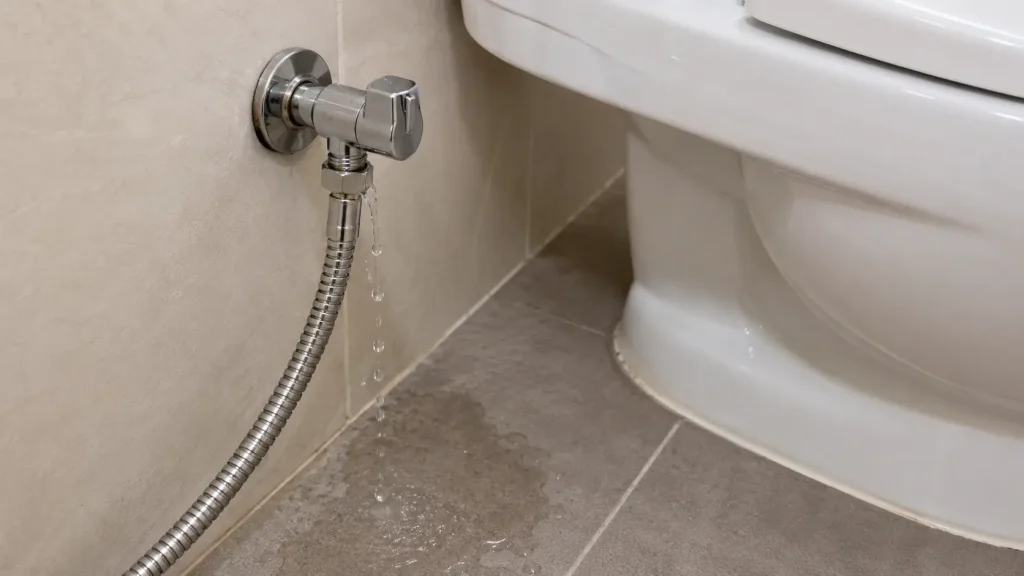
1. First, Check Where the Leak Is Coming From
Do not remove everything immediately. Wipe the area dry first, then turn on the water slowly and look carefully.
Common Leak Points
| Leak location | Common cause | What you may need |
|---|---|---|
| Between hose and spray head | Loose connection or worn rubber washer | Rubber washer or new spray head |
| Between hose and wall valve | Loose connection, missing washer, or thread issue | Rubber washer, thread tape, or new hose |
| Along the hose body | Cracked, swollen, or damaged hose | New bidet hose |
| From the spray head trigger | Internal spray head problem | New spray head |
| From the wall angle valve | Valve worn, loose, or damaged | New angle valve, plumber if unsure |
| From inside the wall | Pipe or fitting problem behind the wall | Plumber or building maintenance |
Simple rule:
If the hose body is cracked, replace the hose.
If the leak is at the connection, check the washer first.
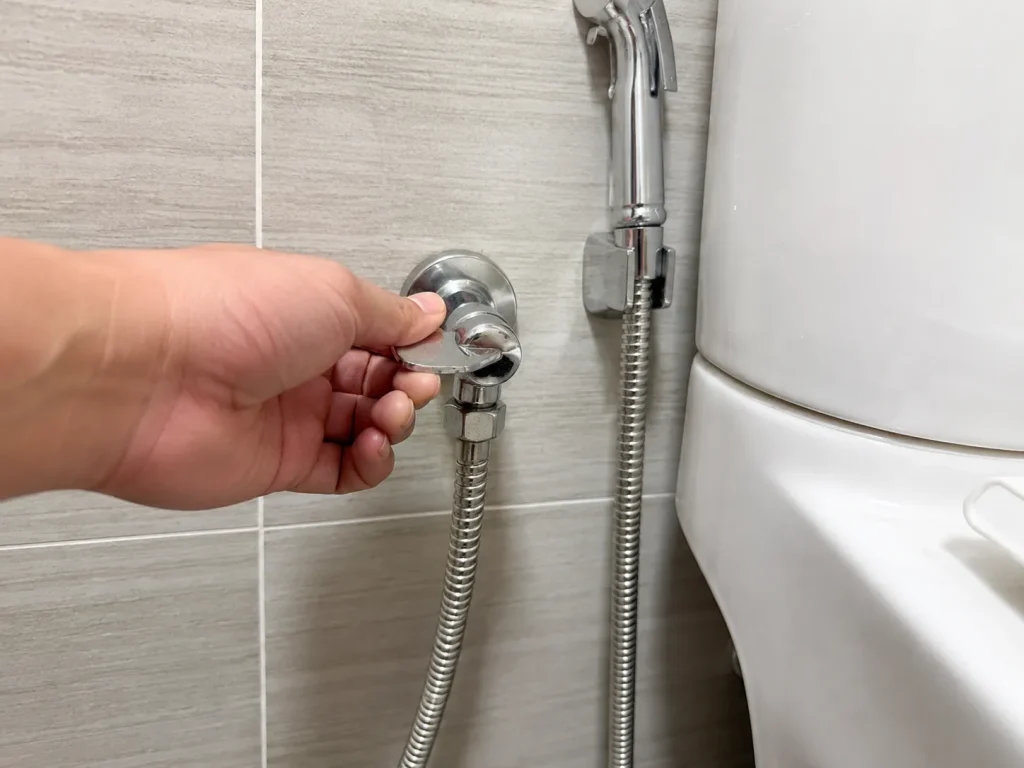
2. Turn Off the Water Before Repairing
Before touching the hose, turn off the small wall valve connected to the bidet spray. This valve is usually beside the toilet bowl or below the cistern.
Turn the valve clockwise until it stops. Then press the bidet spray trigger to release leftover water pressure.
If the wall valve cannot close properly, turn off the main water supply before removing any part. For condo units, check your unit water valve or ask building management if you are not sure.
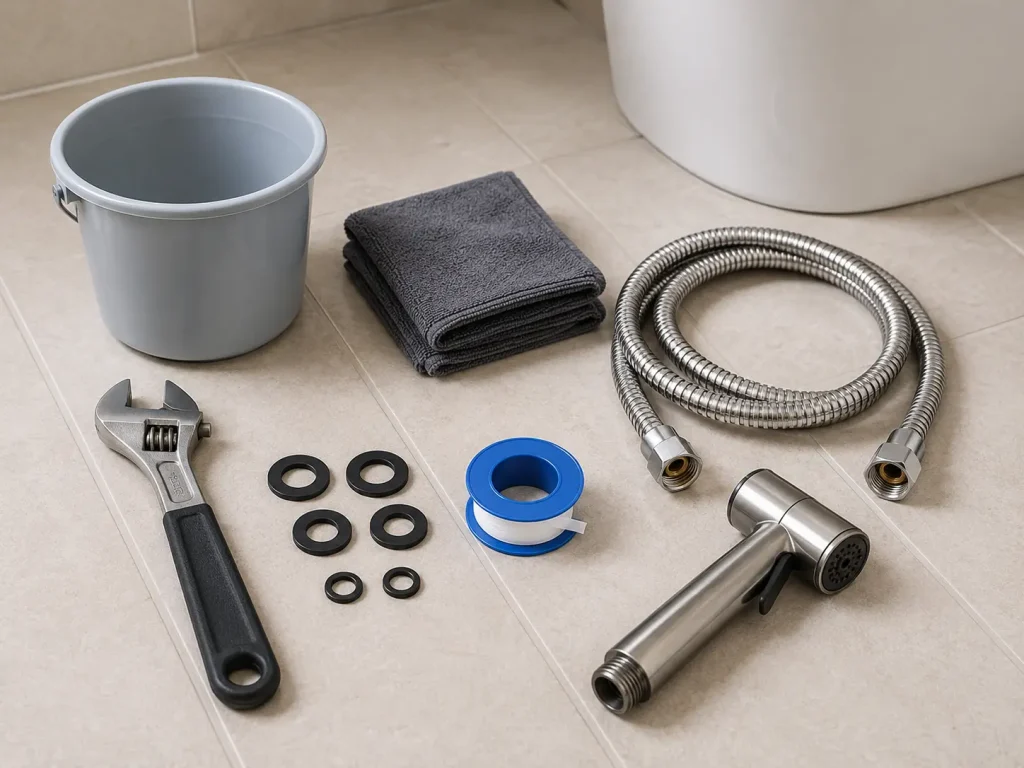
3. Tools and Parts You May Need
For a simple bidet hose repair, prepare:
- Adjustable spanner or suitable wrench
- Dry cloth
- Small pail or container
- Replacement rubber washers
- Thread tape
- New bidet hose, if the old hose is cracked
- New bidet spray head, if the trigger is leaking
- New angle valve, only if the wall valve is faulty
You do not always need to replace the whole set. Many small leaks happen because the rubber washer is old, flattened, missing, or not sitting properly.
4. How to Fix a Leak Between the Hose and Spray Head
This is one of the easiest problems to check.
Step 1: Unscrew the Hose From the Spray Head
Hold the spray head firmly and loosen the hose nut by hand or with a spanner. Use a cloth around the nut if you want to reduce scratch marks.
Step 2: Check the Rubber Washer
Look inside the hose nut. There should usually be a small rubber washer sitting inside.
Replace the washer if it is:
- Missing
- Cracked
- Hardened
- Flattened
- Dirty or not sitting flat
Step 3: Reconnect and Tighten
Put the washer back properly. Screw the hose nut onto the spray head and tighten it firmly.
Do not overtighten. If you force too much, you may damage the thread or crack the plastic spray head.
Step 4: Test Slowly
Turn the water back on slowly and check for dripping. If it still leaks from the spray head connection, the spray head thread or hose nut may be damaged.
5. How to Fix a Leak Between the Hose and Wall Valve
This leak usually appears near the angle valve beside the toilet.
Step 1: Turn Off the Valve
Close the wall valve first. Press the spray trigger to release pressure.
Step 2: Remove the Hose From the Valve
Use a spanner to loosen the hose nut. Keep a small pail or cloth below because some water may come out.
Step 3: Check the Washer
Most bidet hose connections need a rubber washer inside the nut. If the washer is missing or damaged, water can leak even when the nut is tight.
Step 4: Check the Thread
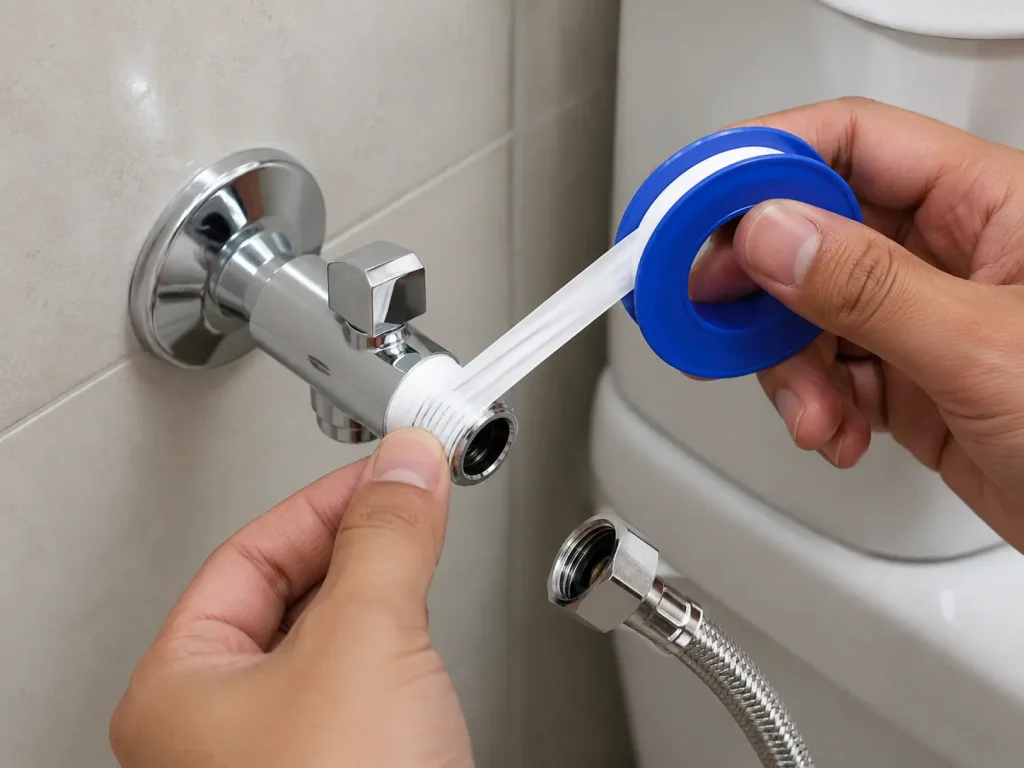
If the connection uses a threaded fitting and the thread is loose, apply thread tape neatly on the male thread before reconnecting.
Wrap the thread tape in the same direction that the nut tightens. Usually 5 to 8 neat rounds is enough for small plumbing connections. Do not wrap until it becomes too thick.
Step 5: Reconnect and Test
Reconnect the hose and tighten it. Turn on the valve slowly. Wipe the area dry and wait a few minutes to check if water appears again.
6. When Should You Replace the Bidet Hose?
Replace the hose if you see these signs:
- Water leaking from the hose body
- Hose outer layer cracked or peeling
- Hose looks swollen
- Metal braided hose is rusty
- Hose bends badly and cannot sit properly
- Hose nut is damaged or cannot tighten
- Leak comes back even after changing washer
For most homes, replacing the bidet hose is easier and safer than trying to patch the hose. Tape on the outside of the hose is only a temporary emergency fix. It should not be treated as a proper repair.
Simple Buying Guide for Bidet Hose
Before buying, check:
- Connection size – many bathroom fittings use common standard sizes, but check your existing hose first.
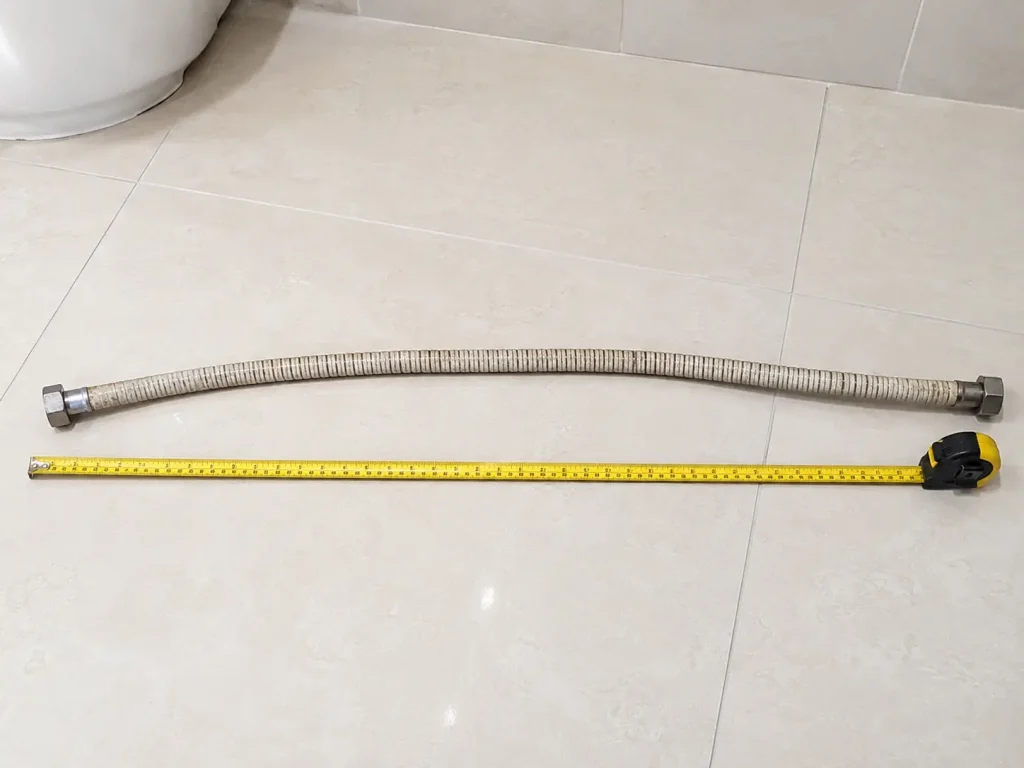
- Length – choose a hose long enough to use comfortably, but not so long that it drags on the floor.
- Material – stainless steel braided hose is common and durable for bathroom use.
- Nut quality – check that both ends can tighten properly.
- Washer included – make sure the hose comes with rubber washers, or buy washers separately.
If you are buying online, take a photo of your current hose connection and measure the hose length before ordering.
7. When Should You Replace the Spray Head?
If water leaks from the trigger area or nozzle even when the hose connection is dry, the spray head may be the problem.
Replace the spray head if:
- Water drips from the trigger after use
- Trigger feels loose or jammed
- Spray pattern is uneven
- Spray head body is cracked
- Connection thread is damaged
Some spray heads can be cleaned if the spray hole is blocked by dirt or mineral build-up. But if the trigger seal inside is worn, replacing the spray head is usually more practical.
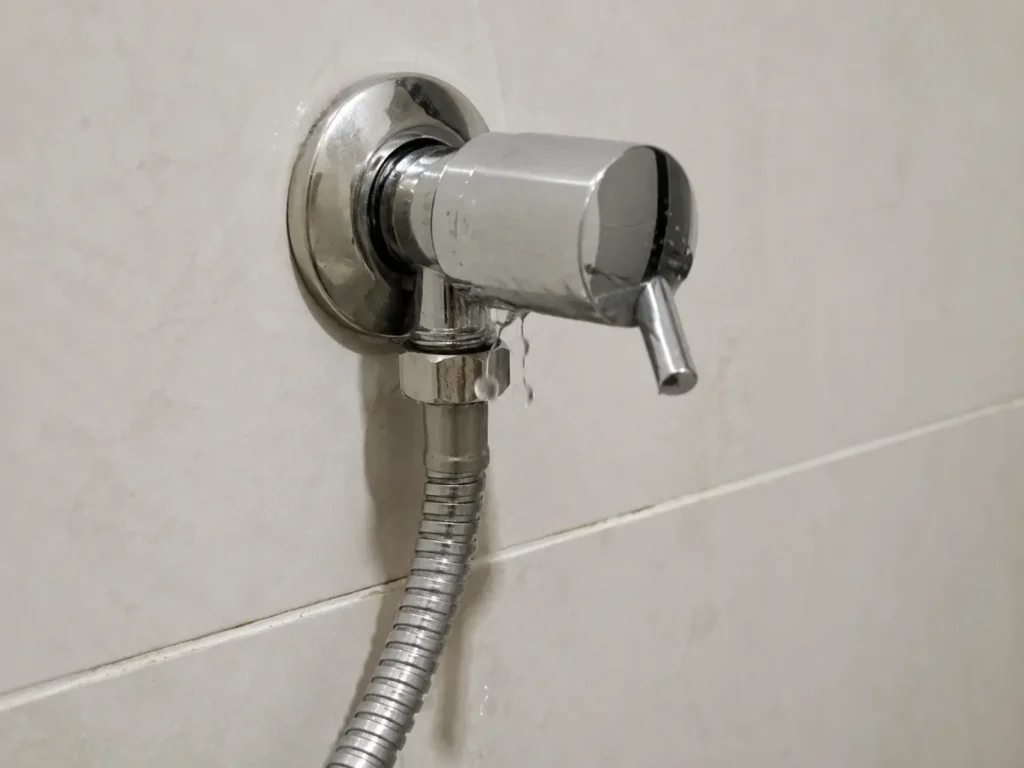
8. When Is the Wall Angle Valve the Problem?
The angle valve is the small tap at the wall that controls water going to the bidet spray or toilet.
The angle valve may be faulty if:
- Water leaks from the valve handle
- Water leaks from behind the valve
- Valve cannot close fully
- Valve feels loose
- Valve is rusty or badly corroded
- Water still flows strongly even after closing the valve
Be careful with this part. If the angle valve is connected to an old wall pipe, forcing it too much can make the leak worse.
For simple hose replacement, most homeowners can DIY. For angle valve replacement, call a plumber if you are not confident, especially in condos, older terrace houses, or rental units where pipe condition is unknown.
Common Mistakes to Avoid
1. Buying a New Spray Head When the Hose Is the Problem
If water comes out from the hose body or hose nut, changing only the spray head may not help.
2. Forgetting the Rubber Washer
Many leaks happen because the washer is missing or not sitting flat. Always check the washer before using more force.
3. Overtightening the Nut
Tight is good. Too tight is not good. Overtightening can damage the thread, crack plastic parts, or crush the washer.
4. Using Too Much Thread Tape
Thread tape helps seal threaded joints, but too much tape can make the connection bulky and harder to tighten properly.
5. Ignoring a Faulty Angle Valve
If the valve cannot shut off water properly, changing the hose may become messy or unsafe. Fix the valve first or ask a plumber.
6. Leaving a Small Leak for Too Long
A small leak can make the toilet floor slippery, stain tiles, damage vanity cabinets, or disturb downstairs neighbours in condo units.
Quick Troubleshooting Guide
| What you see | What to check first | Likely fix |
|---|---|---|
| Drip near spray head connection | Washer inside hose nut | Replace washer or tighten connection |
| Drip near wall valve connection | Washer, thread tape, hose nut | Replace washer, apply thread tape, or replace hose |
| Water from hose body | Hose crack or damage | Replace bidet hose |
| Water from trigger | Spray head internal seal | Replace spray head |
| Water from valve handle | Angle valve fault | Replace angle valve or call plumber |
| Water from wall area | Hidden pipe or fitting issue | Call plumber or building maintenance |
Related Products to Consider
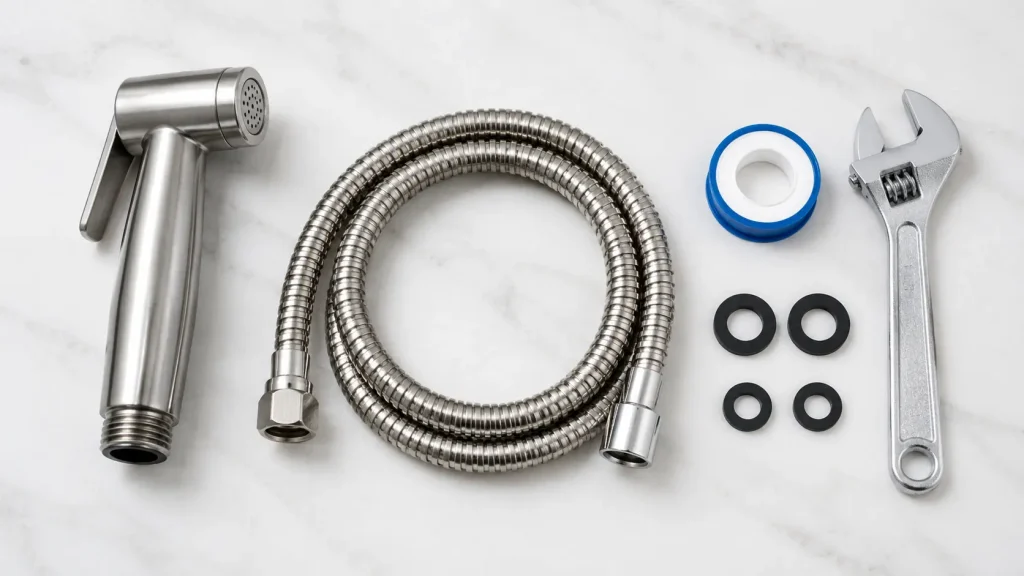
Depending on where the leak is, these products may help:
- Bidet hose for cracked, rusty, swollen, or damaged hose body.
- Bidet spray head for leaking trigger, cracked head, or poor spray pattern.
- Rubber washer set for leaks at hose connections.
- Thread tape for small threaded plumbing connections.
- Adjustable spanner for loosening and tightening hose nuts.
- Angle valve if the wall valve is leaking or cannot close properly.
- Bidet spray replacement kit with hose, spray head, washers, and thread tape.
For rental property owners and landlords, it is useful to keep a spare bidet hose, washers, thread tape, and a small spanner in your basic maintenance kit.
Final Recommendation
For a leaking bidet spray hose, do not guess too fast. First, dry the area and check the leak location.
Use this simple guide:
- Leak at connection: check washer and thread tape.
- Leak from hose body: replace the hose.
- Leak from spray head trigger: replace the spray head.
- Leak from wall valve: check the angle valve carefully.
- Leak from inside wall: call a plumber or building maintenance.
If you are not sure which part to buy, take a clear photo of the leaking area, measure the hose length, and check whether the leak is from the hose, spray head, or wall valve before ordering.