

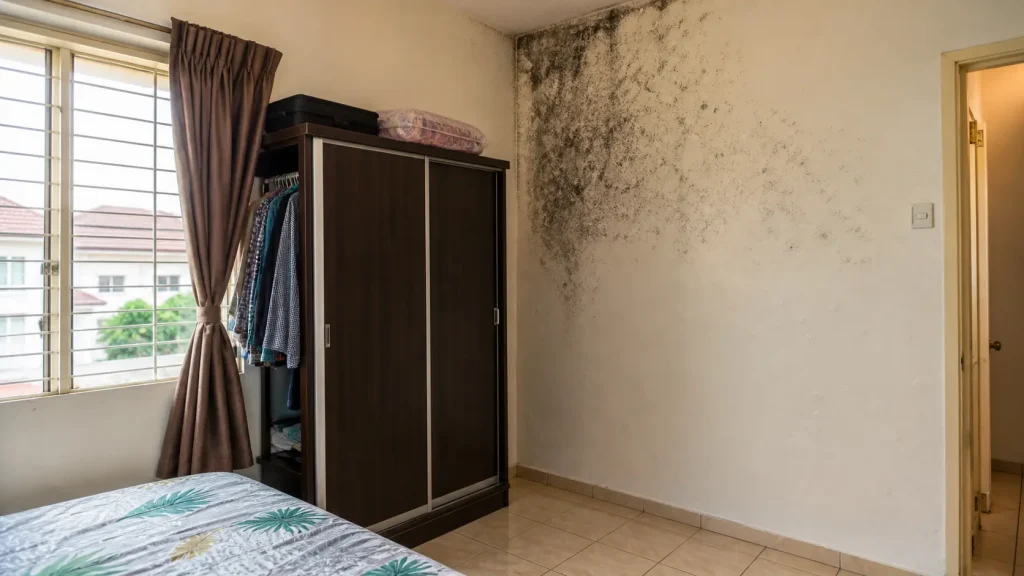
You wipe away a dark patch, repaint the wall, and a few weeks later the same marks return. Mould on walls in Malaysia is common because our warm, humid weather gives it exactly what it needs — moisture, a suitable surface, and time.
The lasting fix is not a stronger-smelling cleaner. You need to remove the visible growth safely, work out where the moisture comes from, dry the wall, and change the condition that allowed the mould to grow.
Phase 1: Find Why You Have Mould on Walls in Malaysia
Mould is a symptom of unwanted moisture. Before you clean anything, look at where the patch appears and what happens around it during rain, cooking, showering, air-conditioning, or long periods with the room closed.
Read the location of the mould
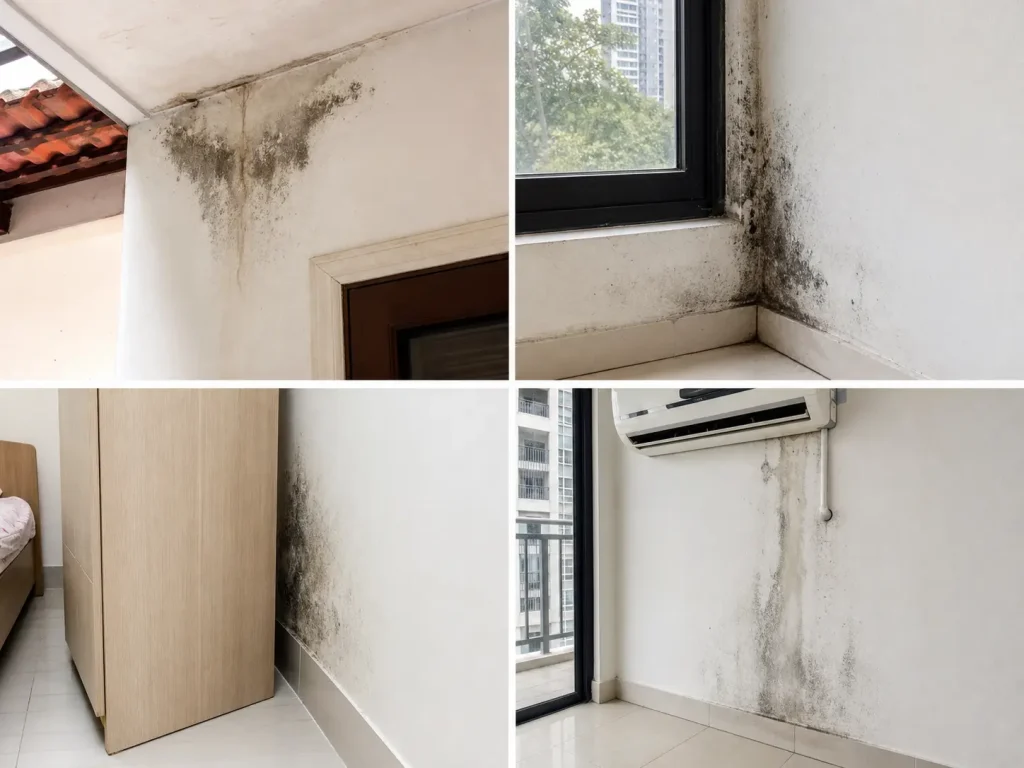
The pattern often gives you a useful first clue. It may not prove the cause, but it tells you what to inspect before spending money on cleaner or paint.
| Where the mould appears | Likely moisture source | What to check first |
|---|---|---|
| Upper wall or ceiling after rain | Roof, flashing, gutter, or external wall leak | Fresh stains, damp ceiling panels, overflowing gutters, and cracked exterior finishes |
| Around a window frame | Rain entry or condensation | Failed external sealant, blocked drainage paths, and water on the glass or frame |
| Behind a wardrobe or bed | Trapped humid air on a cooler wall | Furniture clearance, air movement, and indoor humidity |
| Bathroom wall or ceiling | Steam, poor extraction, or a plumbing leak | Exhaust fan, window use, wet joints, and pipework above or behind the wall |
| Low on the wall near the floor | Plumbing leak, water entry, or rising damp | Skirting damage, nearby pipes, exterior drainage, and a persistent tide mark |
| Near an air-conditioner | Condensation or a blocked drain line | Dripping trunking, wet insulation, drain discharge, and filter or coil condition |
If paint is also bubbling or flaking, see why paint peels in Malaysian homes before repainting. Covering a damp wall with a fresh coat may hide the marks briefly, but it leaves the cause untouched.
Check how large and deep the problem is
A small patch on sound, washable paint is different from a whole wall of growth. As a practical DIY limit, an isolated area smaller than roughly 0.9 m² — about a 90 cm by 90 cm patch — can often be cleaned by a healthy adult with suitable protection.
Arrange professional mould remediation or building-leak assessment if the affected area is larger, repeatedly returns across several walls, smells musty without visible growth, or follows major flooding. Professional help is also the safer choice when sewage or contaminated water is involved, an air-conditioning system may be contaminated, or plasterboard has become soft, swollen, or extensively mouldy.
Phase 2: Prepare to Remove Mould on Walls in Malaysia
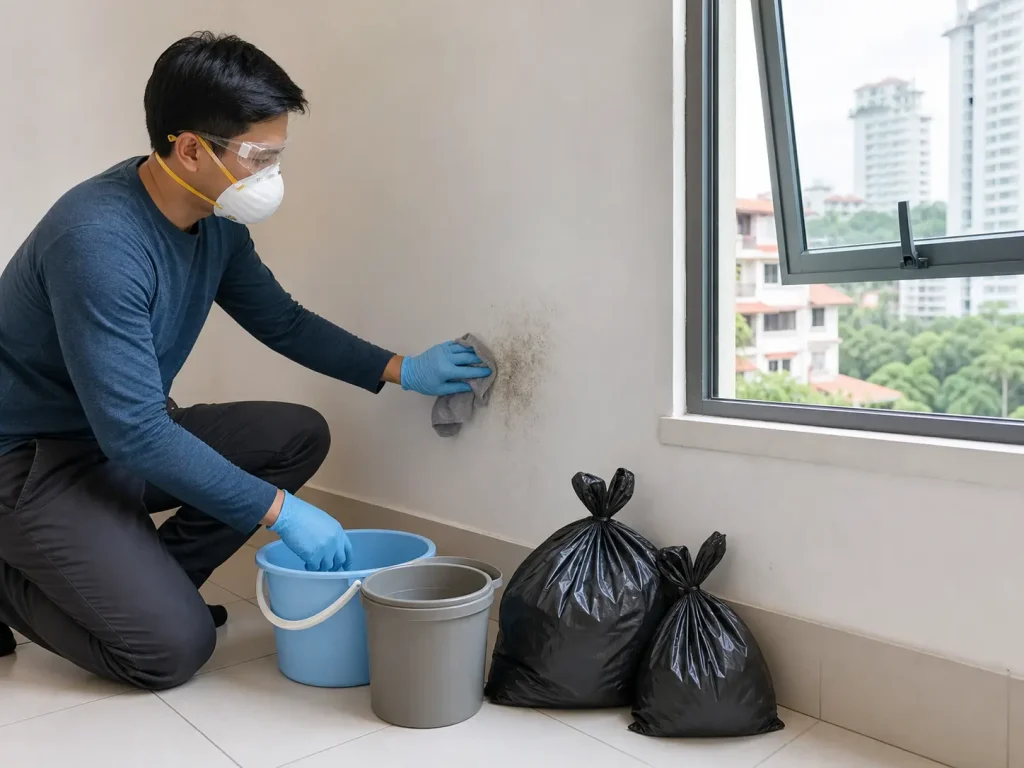
Do not start by dry-brushing or sanding the patch — that can release more particles into the air. Keep children and pets out of the work area, move nearby fabric items away, and ventilate through an exterior window or door when outdoor conditions allow.
Protect yourself before cleaning
People with asthma, chronic breathing problems, mould allergies, or weakened immune systems should not do the cleanup. If exposure seems to cause wheezing, breathing difficulty, persistent coughing, eye irritation, or a rash, leave the area and speak with a healthcare professional.
- Wear a well-fitting N95 respirator.
- Put on nitrile or rubber gloves and fully enclosed goggles.
- Wear long sleeves, long trousers, and washable footwear.
- Read the cleaner label and test it on a hidden painted area first.
- Never mix cleaning products — especially bleach with ammonia, acids, or another cleaner.
Gather a simple cleaning kit
For a small patch on washable painted masonry, start with mild detergent, clean water, two buckets, disposable cloths or sponges, a soft nylon brush, plastic bags, and dry towels. A hygrometer is useful afterwards because it shows whether the room is staying humid even when the wall feels dry.
Choose a labelled mould cleaner only if its directions say it suits your wall finish. Strong products can discolour paint, irritate your lungs, or damage the surface, and no chemical can compensate for an active leak.
Phase 3: How to Remove Mould on Walls in Malaysia Safely
The aim is to physically remove visible mould without soaking the wall. Work over a small section at a time, using damp tools rather than spraying a fine mist across the room.
Clean sound, washable painted masonry
- Fix or stop the immediate water source, then allow the surface to stop actively leaking or dripping.
- Add a small amount of mild detergent to clean water according to its label.
- Dampen a cloth or sponge and wipe the patch gently from the outer edge towards the centre.
- Use a soft nylon brush only where the finish can tolerate light scrubbing.
- Wipe away residue with a separate clean, damp cloth without saturating the wall.
- Dry the surface immediately with towels, ventilation, air-conditioning, or a dehumidifier.
- Seal used disposable cloths in a bag before taking them out of the room.
Inspect the wall once it is fully dry. Some staining may remain even after the growth has been removed, so colour alone is not a reason to keep wetting and scrubbing the paint.
Treat porous or damaged wall materials differently
Mould can grow into absorbent materials such as gypsum plasterboard, wallpaper, insulation, fibreboard, and badly deteriorated plaster. If these materials are soft, crumbling, delaminating, or mouldy through their depth, surface wiping is unlikely to be enough — the damaged section may need controlled removal and replacement.
Do not pull off mouldy wallpaper or cut into a suspect wall casually. Hidden growth can be much larger than the visible patch, and opening the assembly may release dust and expose wiring or pipes.
Let the wall dry before deciding on paint
Do not apply primer, anti-mould paint, filler, or wallpaper over active growth or dampness. Paint is the finishing step after cleaning, moisture repair, and drying — it is not the treatment itself.
Phase 4: Stop Mould on Walls in Malaysia From Coming Back
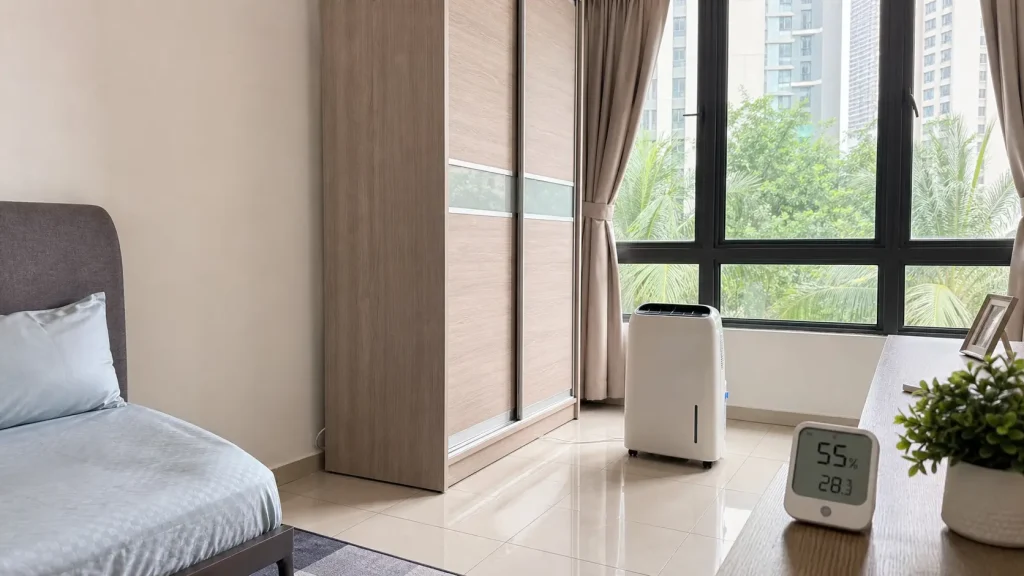
Once the wall is clean, prevention becomes a moisture-control job. Malaysia’s outdoor air is naturally humid, so the practical goal is to keep indoor relative humidity below 60% where possible and avoid long periods of condensation or trapped dampness.
Fix the moisture source
- Rain entering around a window — repair the external gap with a compatible exterior product while keeping drainage holes clear; this guide explains how to caulk a window to keep rain out.
- Roof or external-wall leak — repair the failed tile, flashing, waterproofing, gutter, or wall crack instead of sealing the stain from indoors.
- Plumbing or air-conditioner leak — repair the pipe, fitting, insulation, or condensate drain and confirm that it stays dry during normal use.
- Failed wet-area joint — remove and replace mouldy bathroom sealant when silicone has lifted, split, or separated from the surface.
- Everyday humidity — improve extraction and air movement, especially after showers, cooking, mopping, or drying clothes indoors.
Control humidity without guessing
Place a digital hygrometer in the problem room, away from direct air-conditioner airflow or an open window. If readings remain above 60%, use an exhaust fan, air-conditioner’s dry mode, or a properly sized dehumidifier and monitor the result rather than relying only on how the room feels.
When shopping for a dehumidifier, check its stated extraction capacity in litres per day, recommended room size, humidistat, tank capacity, and continuous-drain option. Small desktop units may help inside a cupboard, but they are usually not designed to control a damp bedroom or living room.
Improve airflow at cold walls and corners
Leave roughly 5–10 cm between large furniture and an external wall where practical. Open wardrobe doors periodically, avoid packing damp clothes away, and run bathroom or kitchen extraction long enough to clear moisture after use.
Opening windows helps only when the incoming air is not wetter than the indoor air. During heavy rain or very humid periods, air-conditioning or dehumidification may be more effective than leaving every window open.
Repaint only after the wall stays dry
When the moisture source is fixed and the wall remains dry, scrape only loose paint, prepare the sound surface, and use a suitable primer if the coating system requires one. A good-quality interior paint with mould-resistant properties can make future cleaning easier, but it cannot prevent growth on a wall that keeps getting wet.
Common Questions About Mould on Walls in Malaysia
Can I paint directly over mould?
No. Painting over mould can trap staining and moisture, while the new coating may soon bubble or peel. Remove the growth, repair the moisture source, let the wall dry, and prepare the surface first.
Is bleach the best way to clean a mouldy wall?
Not automatically. Mild detergent and water are suitable starting points for many hard, washable surfaces, while bleach can discolour paint and expose you to irritating fumes. If you use any specialist cleaner, follow its label exactly.
Do I need a mould test kit?
Usually not when the growth is visible. The more useful questions are how far it extends and what moisture problem is feeding it; testing is better left to a qualified professional when the source is unclear or the result would affect a health, legal, or remediation decision.
Why does mould grow behind my wardrobe?
The wall may be cooler than the room, while closely placed furniture blocks air movement. Humid air then lingers in the gap and can condense on the surface, especially in a closed air-conditioned bedroom.
How quickly can mould return after cleaning?
It can return whenever the wall becomes damp again. If the same marks reappear, stop repeating the surface cleaning and investigate the leak, condensation, humidity, or hidden damaged material.
Final Thoughts: Remove the Moisture, Not Just the Marks
Cleaning a small mould patch is only half the repair. The result lasts when you match the stain pattern to its moisture source, clean the right type of surface, dry it properly, and keep the room below the conditions that encouraged regrowth.
FixRight Hardwares helps Malaysian homeowners make that diagnosis before buying another bottle of cleaner or tin of paint. Start with the cause, choose products that suit the wall, and bring in a professional when the damage extends beyond a safe, small DIY job.
Check the wall today, fix what is keeping it damp, and clean only the area you can handle safely.