
Buying tools can feel strangely risky. Spend too little and the tool may break halfway through a repair; spend too much and you end up with a professional-grade gadget that only comes out once a year.
This guide compares cheap vs expensive tools for Malaysian homeowners and DIYers, especially if you live in a terrace house, condo, apartment, or semi-D and mostly handle small repairs, basic installation, painting, plumbing checks, and occasional weekend projects.
Cheap vs Expensive Tools: The Simple Rule Before You Buy
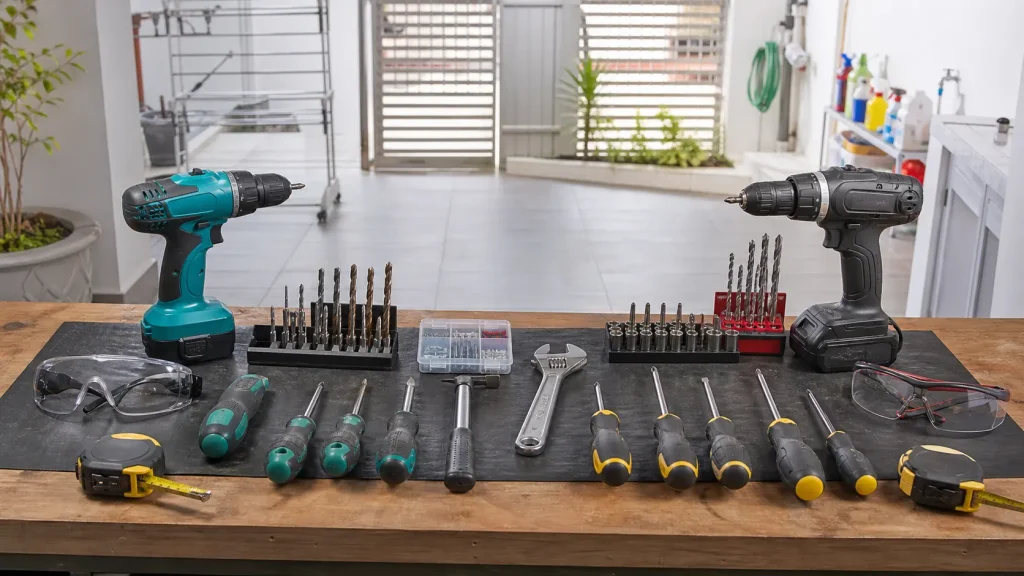
The best tool is not always the most expensive one. It is the tool that is accurate enough, safe enough, durable enough, and comfortable enough for the job you actually do.
For most homeowners, the question is not “cheap or expensive?” It is “what happens if this tool performs badly?” If the answer is a messy finish, you can often save money. If the answer is injury, electrical risk, water damage, or a ruined wall, spend more carefully.
Use the risk test
Before adding anything to your Shopee, Lazada, TikTok Shop, or hardware store basket, ask these four questions:
- Will this affect safety? — Spend more on ladders, electrical testers, extension cords, eye protection, gloves, and cutting tools with proper guards.
- Will this affect accuracy? — Spend more on measuring tools, levels, drill bits, and anything used to mark or cut.
- Will this be used often? — Upgrade tools you will use repeatedly, even if each job is small.
- Will failure cause bigger damage? — Avoid ultra-cheap plumbing, drilling, fastening, and electrical accessories where one mistake can create a bigger repair.
If the job is low-risk, occasional, and forgiving, a budget tool may be perfectly fine. If the tool must stay stable, cut cleanly, measure accurately, or handle power safely, the cheapest option is usually not the smartest option.
Think in cost per use
A RM40 tool used once may be expensive if it breaks immediately. A RM250 tool used for five years can be cheaper in the long run if it saves time, prevents mistakes, and feels good enough that you actually use it.
This matters in Malaysian homes because repairs often come in waves. Once you start fixing a loose hinge, you may also discover a swollen door, a wall plug that has loosened, or a cabinet screw that will not bite. A small set of dependable tools is usually better than a drawer full of bargain items that feel unpleasant to use.
For a beginner setup, start with the basics in FixRight’s guide to essential homeowner tools, then upgrade only the tools you keep reaching for.
Where Cheap Tools Are Usually Good Enough
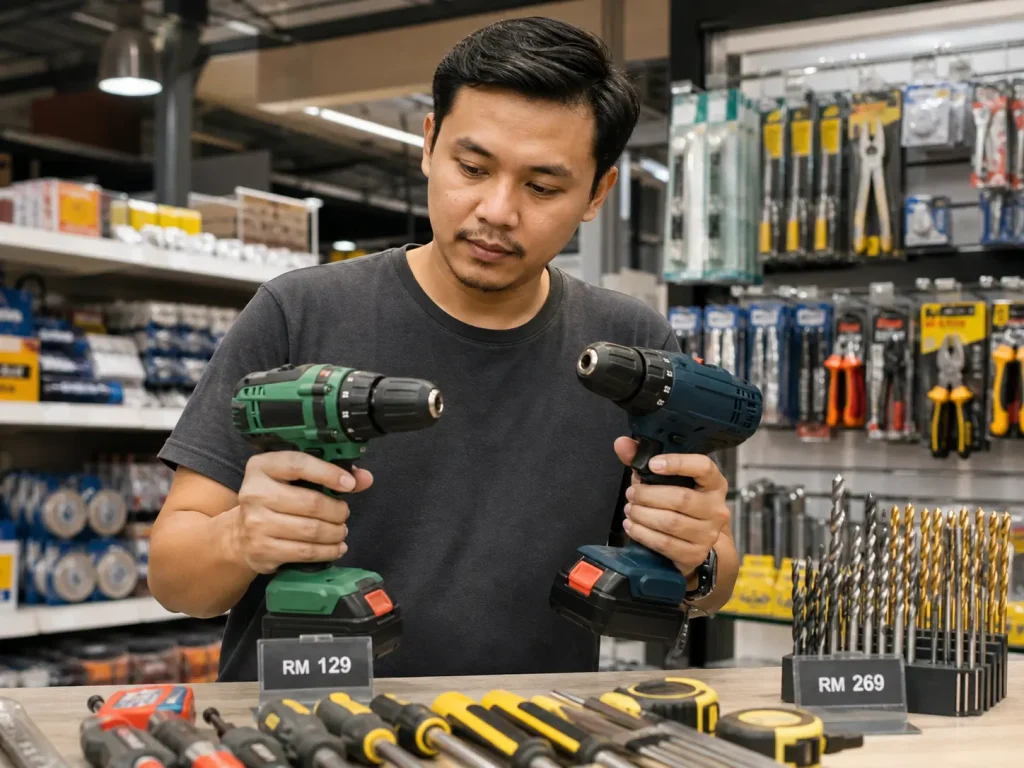
Some tools do not need to be premium because the job is simple, low-stress, or easy to correct. This is where budget tools make sense for normal home use.
Occasional hand tools
Basic hand tools can be affordable and still useful, especially when you only use them for light home repairs. The key is to avoid tools that feel loose, sharp in the wrong places, or badly finished.
Budget-friendly options are usually fine for:
- Hammer — acceptable for hanging pictures, tapping wall plugs, or light assembly work.
- Basic screwdriver set — fine for furniture, battery covers, simple hinges, and light household tasks.
- Adjustable wrench — useful for occasional plumbing fittings if the jaw does not wobble badly.
- Utility knife handle — fine if it locks securely and uses replaceable blades.
- Hex key set — usually enough for flat-pack furniture and small fittings.
The warning sign is poor fit. A screwdriver that slips easily can strip screw heads. A wrench with a loose jaw can round nuts. A utility knife with a weak blade lock can become unsafe quickly.
Consumables for rough work
Consumables are items you use up: sandpaper, masking tape, blades, rollers, brushes, wall plugs, screws, and drill bits. You do not always need the premium version, but you do need the right type.
For example, cheap sandpaper can work for rough sanding, but the wrong grit will still ruin the finish. If you are unsure, FixRight’s sandpaper grit guide explains which grit to use before painting, smoothing wood, or preparing filler.
Budget consumables are usually fine for:
- Rough sanding — removing old paint, shaping timber, or smoothing filler before final finishing.
- Temporary masking — short painting jobs where the tape is removed quickly.
- Basic paint trays — simple plastic trays for one-room repainting.
- General-purpose screws — light indoor furniture, brackets, and non-structural fixtures.
- Disposable brushes — touch-ups, primer, glue, or rough outdoor work.
Spend a little more when the finish matters. A cheap brush can leave bristles in paint, cheap masking tape can bleed along the edge, and low-quality screws can snap or rust faster in humid areas.
Tools for one-off light jobs
If you need a tool once for a low-risk job, budget can be sensible. A cheap caulking gun, basic scraper, paint tray, or small clamp may be enough if the task is simple and the tool is not under heavy load.
Good one-off budget buys include:
- Caulking gun — for one bathroom edge, window gap, or sink area.
- Plastic scraper — for removing labels, loose paint, or old residue.
- Small clamps — for light craft, shelves, or glue-ups.
- Paint roller frame — for occasional room painting.
- Bucket and mixing tray — for cleaning, filler, or paint prep.
The trick is to separate “cheap but adequate” from “cheap and frustrating”. If the tool bends, jams, slips, or makes the job messy, it may cost more in wasted material than it saved.
Where Expensive Tools Are Worth Paying For
Premium tools earn their keep when they improve accuracy, safety, comfort, or repeat use. You do not need professional-grade everything, but you should avoid bargain-bin versions of tools that can cause bigger problems.
Measuring and marking tools
A bad measurement can ruin the entire job before you even start. If a shelf is crooked, a curtain rail is uneven, or a drilled hole lands in the wrong place, the repair becomes patching and repainting.
Spend more carefully on:
- Tape measure — the hook should move correctly, the blade should stay readable, and the case should survive drops.
- Spirit level — cheap levels can be inaccurate, which defeats the purpose.
- Laser level — useful if you often install shelves, picture frames, cabinets, or wall panels.
- Pencil or marker — simple, but it must mark clearly on tile, cement, timber, or metal.
- Stud or metal detector — worth choosing carefully if you drill into walls often.
If you are still learning measurement basics, read FixRight’s guide on how to read a tape measure before buying more tools. Skill often saves more money than the tool itself.
Drills, drivers, and bits
Power tools are where cheap vs expensive tools gets more nuanced. A budget cordless drill may be fine for light screws and small holes, but it may struggle with concrete, metal, long screws, or repeated use.
For Malaysian homes with brick, concrete, plaster, tile, and timber, the drill is often the centre of the DIY kit. Spend enough to get steady torque, a usable battery, a comfortable grip, and a chuck that holds bits securely.
Drill bits are one place where you should lean toward good quality from the start, especially for tiles, concrete, and metal. A cheap or wrong bit can overheat, crack, snap, or skate across the surface. If a bit breaks while drilling tile, the broken piece can fly out — and if it hits someone nearby, especially in the eye, that small saving can become a lifelong regret.
| Tool or Accessory | When Budget Is Fine | When to Spend More |
|---|---|---|
| Cordless drill | Light furniture, pilot holes, simple screws | Regular wall drilling, cabinet work, mixed materials |
| Impact driver | Occasional flat-pack furniture | Long screws, decking, timber framing, frequent fastening |
| Masonry and tile bits | Avoid very cheap bits | Tiles, concrete walls, metal, and repeated drilling |
| Screwdriver bits | Light screws | Cabinets, hinges, stubborn screws, frequent use |
| Hole saw | Thin boards or one-off holes | Clean holes in doors, cabinets, or thicker panels |
If you are unsure whether you need a drill or impact driver, start with FixRight’s drill vs impact driver guide. If you are deciding between battery and plug-in tools, the corded vs cordless tools comparison will help you avoid buying the wrong format.
Safety gear and electrical accessories
Do not go ultra-cheap on anything that protects your body or handles electricity. Safety gear does not need to be fancy, but it should fit properly, feel sturdy, and be rated for the job.
One common habit we notice in Malaysia is skipping eye protection because the job feels small: “just drill one hole”, “just cut for a few minutes”, or “no need to spend extra for goggles”. If nothing happens, it feels fine. But if one tile chip, metal shaving, wood splinter, or broken drill bit hits your eye, that injury can follow you for the rest of your life.
Spend more carefully on:
- Eye protection — especially for drilling, cutting, grinding, scraping, and overhead work.
- Work gloves — choose grip and protection based on the task, not just thickness.
- Dust mask or respirator — important for sanding, mouldy areas, cement dust, and strong smells.
- Extension cords — use correctly rated cords with solid sockets and cable insulation.
- Electrical testers — choose a reliable tester and understand its limits before use.
Malaysia’s humid climate also matters. Rubber, plastic, and metal parts can degrade faster in hot storerooms, wet kitchens, balconies, and car porches. A slightly better extension cord, ladder foot, or glove coating may last longer simply because it handles heat and humidity better.

Cheap vs Expensive Tools by Category
Here is a practical tool buying guide Malaysia homeowners can use before spending money. Treat it as a starting point, not a brand list.
| Category | Save or Spend? | Why |
|---|---|---|
| Tape measure | Spend a bit more | Accuracy, blade stiffness, and hook movement matter |
| Hammer | Budget is often fine | Light home use does not need a premium hammer |
| Screwdrivers | Mid-range is better | Poor tips strip screws and damage fittings |
| Adjustable wrench | Mid-range is better | Loose jaws round nuts and make plumbing harder |
| Drill | Spend according to use | Frequent wall drilling needs better torque and battery |
| Drill bits | Spend more for hard materials | Cheap bits struggle on concrete, tile, and metal |
| Paint brushes | Spend more for visible finish | Cheap bristles can shed and leave rough lines |
| Paint rollers | Mid-range is usually fine | Better rollers hold paint evenly and reduce splatter |
| Sandpaper | Buy the right grit first | Quality matters, but grit choice matters more |
| Ladder | Spend carefully | Stability and load rating are safety issues |
| Extension cord | Spend carefully | Heat, overload, and poor socket grip can be dangerous |
| Tool box | Budget is fine | Storage can be simple as long as tools stay dry |
Hand tools
For hand tools, comfort and fit matter more than brand prestige. Pick up the tool if you are buying in-store. The handle should feel solid, the metal should not flex too easily, and moving parts should not rattle excessively.
For online purchases, check photos and reviews for the exact weak point: screwdriver tips, wrench jaws, plier hinges, blade locks, and handle grip. A five-star rating is less useful than a review saying the tool did not slip, bend, rust, or loosen after use.
Power tools
Power tools are worth upgrading when the motor, battery, chuck, switch, or casing will affect the job. A drill that stalls constantly on masonry walls is not just annoying — it can enlarge holes, overheat bits, and make wall plugs fit badly.
For occasional condo or apartment repairs, a modest cordless drill may be enough. For a terrace house with gates, grilles, concrete walls, shelves, outdoor fixtures, and repeated repairs, a better drill kit is often worth it.
Painting and finishing tools
Painting is where many people overspend on paint but underspend on applicators. A decent roller, brush, masking tape, and tray can make budget paint look neater. A terrible brush can make good paint look amateur.
Spend more on the tool that touches the final surface. Save on trays, liners, buckets, and rough prep items where the finish is less affected.
Plumbing tools
For light plumbing jobs, a basic adjustable wrench, pliers, thread tape, and replacement washers may be enough. But avoid weak tools that slip on metal fittings because they can scratch chrome, round nuts, or make leaks worse.
Also be careful with ultra-cheap replacement parts. A low-quality hose, washer, angle valve, or connector can fail faster in bathrooms and wet kitchens where pressure, heat, and daily use are constant.
How to Avoid False Economy When Buying DIY Tools Malaysia
False economy is when the cheaper item becomes more expensive because it wastes time, damages materials, or needs replacing quickly. It is common with DIY tools Malaysia homeowners buy online during sales.
Read the specification, not just the headline
“Heavy duty” is not a specification. “Professional” is not a specification. “Industrial grade” in a listing title does not mean much unless the details support it.
Look for:
- Material — aluminium, steel, chrome vanadium, stainless steel, plastic grade, rubber grip.
- Size — actual length, jaw opening, blade width, cable length, drill bit diameter.
- Rating — load rating, voltage, wattage, amp rating, battery capacity, speed, torque.
- Compatibility — battery platform, bit type, chuck size, plug type, screw type, blade type.
- Warranty or parts — replacement blades, batteries, chargers, carbon brushes, bits, or accessories.
If the listing avoids details and relies only on dramatic words, be cautious. A proper tool listing should tell you what the tool is made of and what it can handle.
Buy the middle when unsure
For many home tools, the best value sits in the middle. The cheapest option may be too weak, while the most expensive option may be built for contractors who use it daily.
A sensible middle-range tool usually gives you:
- Better fit — less slipping, wobbling, and stripped screws.
- Better control — smoother triggers, grips, locks, and adjustments.
- Better lifespan — stronger moving parts and less frustration over time.
- Better consistency — fewer mistakes from flexing, dullness, or poor alignment.
This is especially true for drills, levels, pliers, wrenches, cutting tools, and paint applicators. You do not need to buy the top shelf, but do not buy something that feels disposable before the first job.
Upgrade one tool at a time
Do not replace your whole kit just because one project is coming up. Upgrade based on repeated pain.
Use this simple checklist:
- Replace the tool you borrow most often.
- Upgrade the tool that makes you avoid starting repairs.
- Spend more on the tool that affects safety or accuracy.
- Keep budget versions for backup or rough jobs.
- Avoid buying a full set if you only need one size or one function.
This keeps your spending focused. A small, reliable kit beats a giant cheap set where half the pieces never get used.
Best Tools for Home Repair: What to Buy Cheap, Mid-Range, or Premium
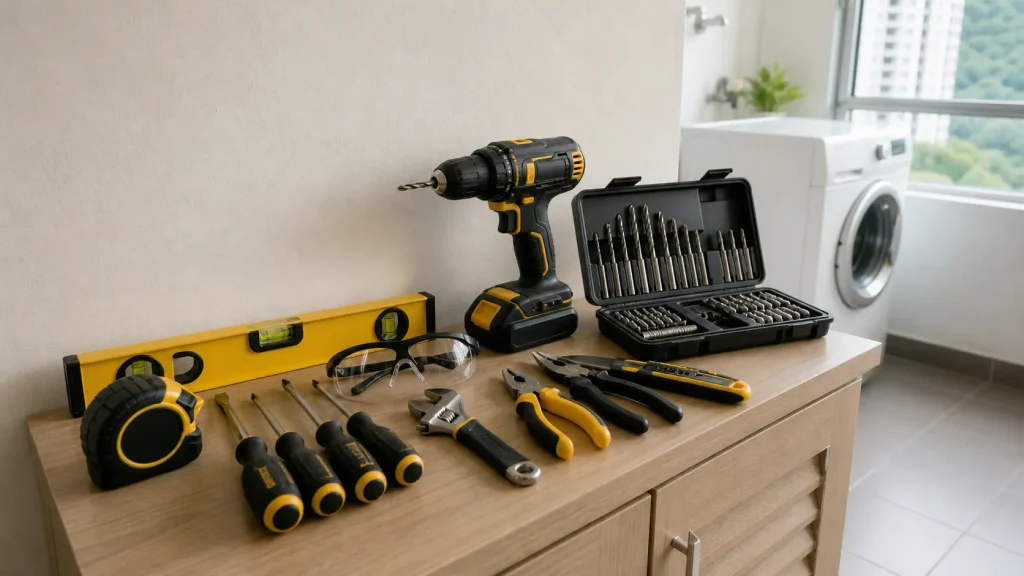
For most Malaysian homeowners, the best tools for home repair fall into three buying tiers. This does not mean you need luxury tools. It means matching the tool quality to the consequence of failure.
Buy cheap for low-risk, occasional jobs
Cheap tools can be fine when the job is simple, the finish is not critical, and the tool is easy to replace.
Good budget buys:
- Paint trays and liners — simple plastic versions are enough for occasional painting.
- Basic scraper — useful for residue, old tape, and loose paint.
- Bucket — no need for anything fancy.
- Hex key set — fine for furniture assembly.
- Disposable brushes — acceptable for primer, glue, and rough touch-ups.
Buy mid-range for regular home repairs
Mid-range tools are usually the sweet spot for homeowners. They feel better, last longer, and reduce the small frustrations that make DIY work unpleasant.
Good mid-range buys:
- Screwdriver set — better tips reduce stripped screws.
- Adjustable wrench — smoother jaw adjustment helps plumbing and fittings.
- Tape measure — clearer markings and better blade stiffness improve accuracy.
- Pliers — stronger hinge and grip make them safer and easier to use.
- Paint roller and brush — neater finish with less shedding and splatter.
Spend more for safety, accuracy, and heavy use
Spend more when the tool can hurt you, damage your home, or frustrate you every time you use it.
Worthier upgrades:
- Ladder — buy for stability, load rating, foot grip, and safe working height.
- Cordless drill — especially if you drill into brick, concrete, or multiple walls.
- Drill bits — good bits matter more than many beginners realise.
- Extension cord — rating, cable quality, and socket grip matter.
- Dust protection — sanding, cement dust, and mouldy areas need proper protection.
Think of premium tools as targeted upgrades, not a personality change. You are not becoming a contractor; you are making the difficult jobs less risky and less annoying.
Final Thoughts: Spend Where the Mistake Costs More
The real answer to cheap vs expensive tools is simple: save where the job is forgiving, and spend where the mistake is expensive. A budget paint tray is fine. A flimsy ladder, bad drill bit, inaccurate level, or poor extension cord is not the place to be clever with savings.
For Malaysian homes, humidity, concrete walls, tiled floors, compact condo storage, and wet areas all affect tool choice. Buy fewer tools first, choose better where safety and accuracy matter, and upgrade only after real use shows you what is worth improving.
FixRight’s goal is to help you choose tools that solve actual home problems without wasting money on the wrong thing. Start practical, stay safe, and let each project teach you what deserves the next upgrade.
Before your next repair, check whether the tool needs to be cheap, mid-range, or dependable enough to protect the whole job.