

Trying to choose the right ladder sounds simple until you are standing in a hardware shop staring at folding ladders, telescopic ladders, platform ladders, and extension ladders that all claim to be “heavy duty”. The wrong choice is not just annoying — it can wobble, take up too much space, or make a normal home repair feel unsafe.
This guide helps you choose the right ladder for a Malaysian terrace house or condo based on the jobs you actually do: changing lights, cleaning ceiling fans, painting walls, reaching awnings, checking gutters, and storing the ladder without blocking half your yard or storeroom.

Phase 1: Choose the Right Ladder Based on Your Home Type
Before looking at brands or prices, start with the building you live in. A double-storey terrace house and a high-rise condo may both need a ladder, but they usually need very different ladders.
Match the ladder to your common jobs
Most homeowners buy too much ladder or too little ladder. The safest starting point is to list the jobs you will repeat more than once a year.
- Changing ceiling lights or downlights
- Cleaning ceiling fans and air-cond filters
- Painting walls or touching up corners
- Reaching curtain rails or high shelves
- Washing windows, grilles, or balcony glass
- Clearing porch awnings, drains, or gutters
If most of your jobs are indoors, a stable step ladder or platform ladder usually makes more sense than a tall extension ladder. If you live in a terrace house and need to reach the porch roof, exterior wall, or gutters, you may need a separate extension ladder — not one ladder pretending to do everything.
For a broader beginner setup, it helps to think of a ladder as part of your essential homeowner tools, not just a one-off purchase.
Terrace house ladder needs
A terrace house usually has more height variety: porch ceiling, back kitchen extension, air-cond compressor, exterior walls, and sometimes a second-storey gutter. This means you may need one compact ladder for inside the house and one taller ladder for outdoor jobs.
- Indoor jobs — a 4-step to 6-step platform ladder is usually practical for lights, fans, shelves, and curtain rails.
- Porch and awning jobs — a multi-purpose ladder or extension ladder may be needed, depending on roof height and ground space.
- Gutter or upper-wall jobs — a proper extension ladder is safer than standing on the top step of a short ladder.
- Narrow back lanes — check whether the ladder can open safely without touching walls, drains, bins, or parked motorcycles.
Condo ladder needs
In a condo, the main issue is usually storage and indoor stability. You may need to reach ceiling lights, curtains, air-cond filters, kitchen cabinets, and balcony glass — but you probably do not need a tall extension ladder.
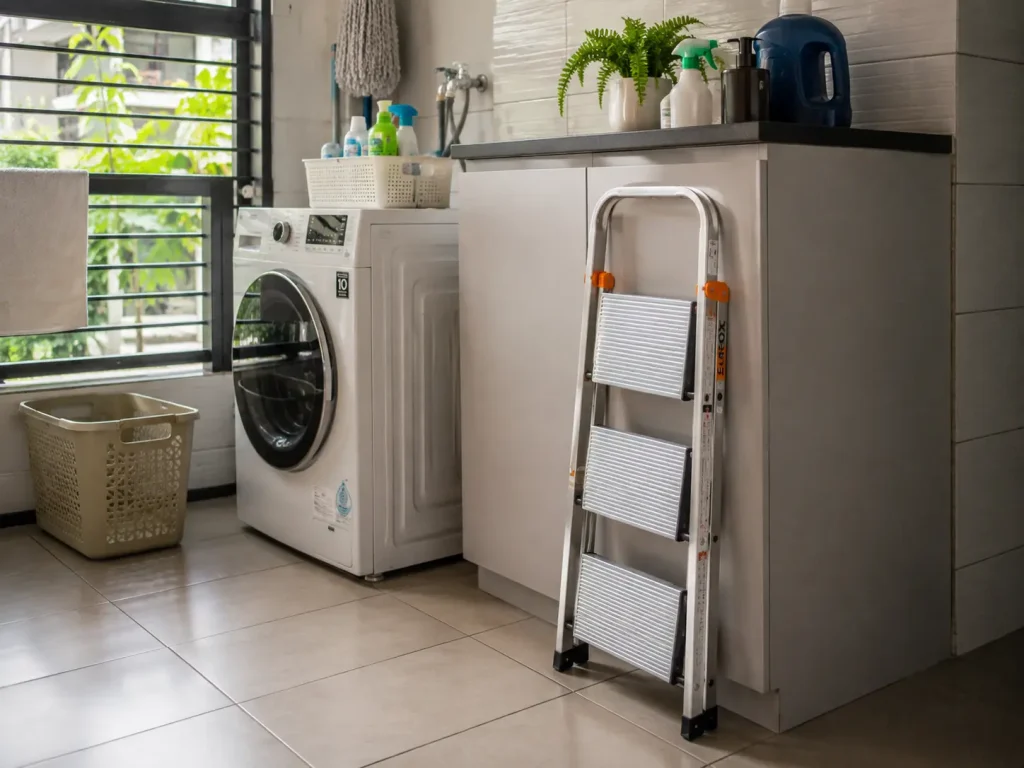
- Compact storage — a foldable step ladder or slim platform ladder is easier to store in a yard, utility room, balcony, or behind a door.
- Indoor flooring — rubber feet matter because condo floors are often tile, vinyl, or laminate.
- Balcony caution — never use a ladder near an open balcony edge where a slip could become a fall from height.
- Management rules — some exterior-facing work may be restricted, especially facade, balcony, and air-cond ledge areas.
Phase 2: Compare Ladder Types Before You Buy
Once you know the jobs, compare ladder types by function. The best ladder for a condo ladder Malaysia search is often not the tallest one — it is the one you can set up safely in a tight space.
| Ladder Type | Best For | Usually Less Suitable For |
|---|---|---|
| Step ladder | Indoor lights, fans, shelves, cleaning | Very high exterior walls or gutters |
| Platform ladder | Longer tasks like painting, wiring, cleaning fans | Tight storage if the frame is bulky |
| Multi-purpose ladder | Terrace house indoor and some outdoor jobs | Users who dislike heavier folding mechanisms |
| Telescopic ladder | Compact storage and occasional height access | Long work sessions where stiffness matters |
| Extension ladder | Porch roof, exterior wall, gutter access | Condos, tight interiors, quick daily tasks |
Step ladder
A step ladder is the classic A-frame ladder. It opens by itself and does not need to lean on a wall, which makes it practical for indoor Malaysian homes with tiled floors and painted cement walls.
Choose a step ladder if your tasks are short and simple: changing bulbs, wiping ceiling fans, reaching high cabinets, or cleaning air-cond filters. Avoid standing on the very top cap unless the ladder is specifically designed as a platform.
Platform ladder
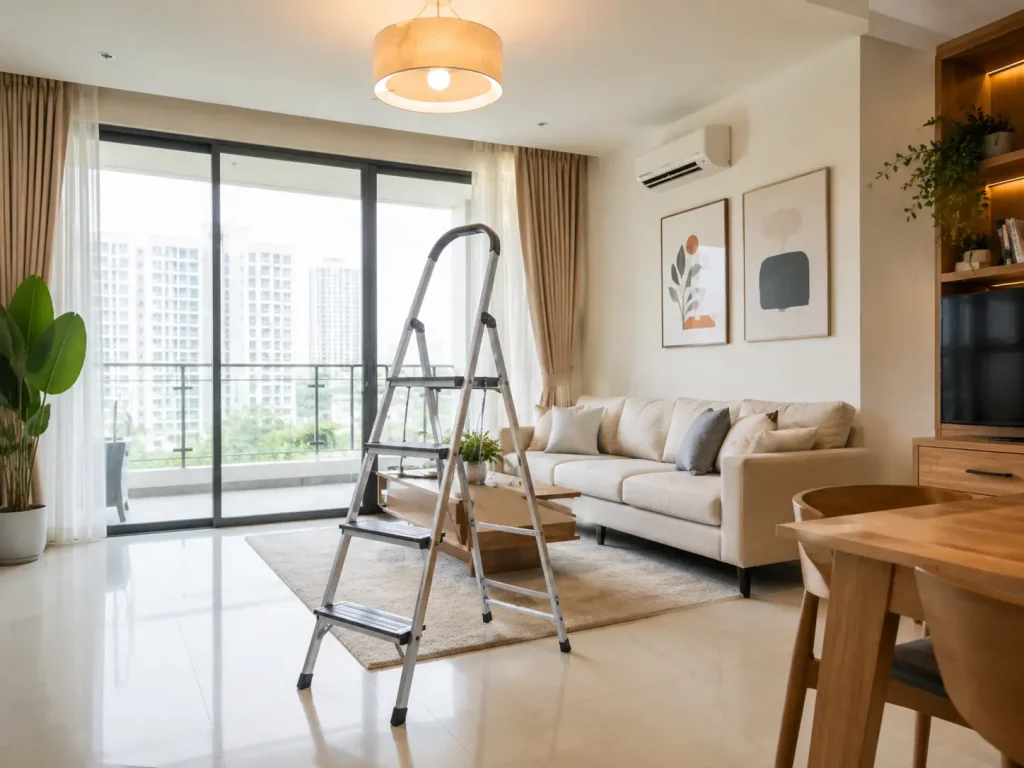
A platform ladder is often the better version of a step ladder for home use. The standing platform gives your feet more support, and the handrail or top tray gives you a steadier working position.
This is useful for painting, drilling curtain rail holes, fixing light fittings, or doing anything that takes more than a minute. If you are planning to paint a room without making a mess, a platform ladder is usually more comfortable than balancing on narrow rungs.

Multi-purpose ladder
A multi-purpose ladder can fold into different shapes: A-frame, straight extension, stair position, or platform-style support depending on the model. It is attractive for terrace houses because one ladder can handle several jobs.
The trade-off is weight and setup complexity. If the locking hinges are stiff or unclear, people take shortcuts — and shortcuts are where ladder safety problems begin.

Telescopic ladder
Telescopic ladders collapse into a short, compact form, which is why they look perfect for condos. They can be useful if storage is your main constraint and you only use the ladder occasionally.
Check the locking mechanism carefully before buying. Each rung should lock positively, the feet should grip well, and the ladder should not feel twisty when extended.

Extension ladder
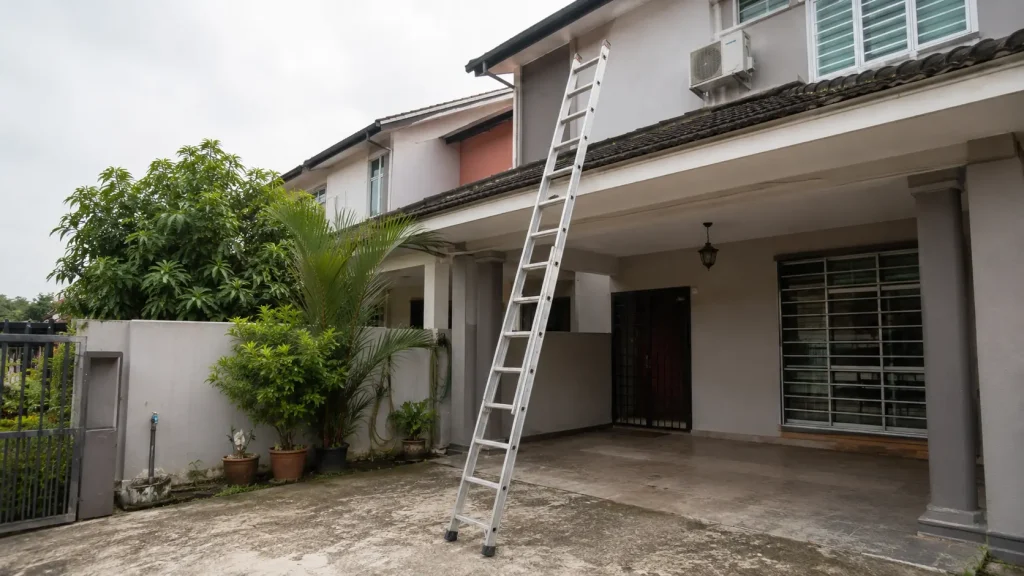
An extension ladder is for jobs where you need to reach higher exterior points. It must lean against a strong surface at the correct angle, so it is not the right ladder for casual indoor work.
For terrace houses, an extension ladder may be relevant for gutters, porch roofs, awnings, and high exterior painting. For condos, it is rarely appropriate because the work area is usually inside a unit, on a balcony, or under building management control.
Phase 3: Choose the Right Ladder Height and Reach
Ladder height is where many homeowners make the wrong call. A ladder’s advertised height is not the same as your safe working reach.
Measure the height before choosing
Use a tape measure where possible instead of guessing. If you are not confident reading all the markings, FixRight’s guide on how to read a tape measure is a useful refresher before buying anything height-related.
- Measure your floor-to-ceiling height indoors
- Measure the height of curtain rails, cabinets, and ceiling fans
- Estimate porch ceiling or awning height from ground level
- Check whether the floor is flat where the ladder will stand
- Confirm you can work without standing on the top prohibited step
Most Malaysian condos have ceilings around the normal residential range, so a compact 4-step or 5-step ladder is often enough for lights and fans. Terrace houses vary more, especially with double-volume living areas, stairwells, porch roofs, and extensions.
Safe reach matters more than ladder height
Your safe reach is roughly the height you can work at while standing below the top restricted step. If you need to stretch your arm fully, lean sideways, or stand on the top cap, the ladder is too short for that task.
Use this as a practical guide:
| Home Task | Practical Ladder Choice | Notes |
|---|---|---|
| Change ceiling lights | 4-step to 5-step step ladder | Works for many normal condo and terrace interiors |
| Clean ceiling fan | 5-step platform ladder | More comfortable because both hands may be busy |
| Paint upper wall corner | Platform ladder | Better foot support for longer work |
| Reach porch awning | Multi-purpose or extension ladder | Depends on ground space and wall support |
| Clean second-storey gutter | Extension ladder | Use only on firm ground with proper angle and support |
| Access condo balcony exterior | Usually avoid DIY ladder work | Check management rules and fall risk first |

Phase 4: Check Safety Features Before Price
Cheap ladders are tempting, especially online, but safety details matter more than a small saving. A ladder is one tool where “good enough” should still feel steady under your full body weight.
Inspect the load rating
The load rating should cover your body weight plus tools, paint, fittings, or anything you carry. Do not assume a ladder is strong just because it says heavy duty in the listing title.
- Look for a clear maximum load rating
- Check whether the rating is printed on the ladder or only in the online listing
- Include your tools, paint tray, or small parts in the total load
- Avoid ladders with vague claims and no specification label
For most home users, a ladder rated around 100kg to 150kg is common in retail listings, but the real point is this: buy based on a stated load rating, not on appearance.
Check the feet, hinges, and spreader bars
The parts that touch the floor and lock the ladder open do the quiet hard work. If these feel flimsy in the shop, they will not improve when you are halfway up changing a light.
- Rubber feet — help grip tiles, porch floors, and smooth condo surfaces.
- Wide stance — gives better side-to-side stability, especially for platform ladders.
- Locking hinges — should click firmly into place with no half-locked feeling.
- Spreader bars — prevent A-frame ladders from opening too far or collapsing inward.
- Rung texture — should give grip even when your slippers or shoes are slightly dusty.
For indoor use, also think about bare feet. Many Malaysian homeowners climb a step ladder without shoes because the ladder is inside the living room, bedroom, or condo unit. Some anti-slip step designs are very sharp or ridged, especially on aluminium ladders, and they can be painful under bare feet. If you expect to use the ladder indoors without shoes, choose wider steps with a comfortable anti-slip surface — not narrow metal rungs that bite into your sole.
Loose slippers are still risky because they can slide, twist, or catch on a rung. If you need footwear, use something secure with grip rather than casual house slippers.
Consider aluminium, fibreglass, or steel
Material affects weight, durability, and electrical safety. For most homeowners, aluminium is popular because it is light and easier to move around the house.
| Material | Pros | Watch Out For |
|---|---|---|
| Aluminium | Lightweight, common, easy to carry | Conducts electricity, so avoid electrical work near live circuits |
| Fibreglass | Better for electrical safety, sturdy | Heavier and often more expensive |
| Steel | Strong and budget-friendly | Can rust in humid areas if coating is damaged |
Malaysia’s humidity matters here. If you store a ladder in a wet yard, open balcony, or damp storeroom, inspect it regularly for corrosion, loose rivets, worn feet, and dirt buildup.

Phase 5: Choose the Right Ladder for Storage, Budget, and Long-Term Use
To choose the right ladder well, do not only ask whether it reaches the ceiling. Ask whether you will actually store it properly, move it easily, and use it without feeling nervous.
Storage space
Measure where the ladder will live before buying. A ladder that is too long for your condo yard or too awkward for your terrace storeroom will end up leaning behind a door, scratching walls, or blocking access.
- Condo utility yard — slim step ladders and telescopic ladders are easiest to store.
- Terrace house store room — platform ladders and multi-purpose ladders may fit if folded height is checked.
- Car porch wall — only store outdoors if it is dry, secure, and protected from rain.
- Balcony — avoid long-term exposure to rain and harsh sun, especially for rubber feet and plastic parts.
Budget range
Ladder prices vary by height, material, load rating, and brand. For a simple home ladder, you may see basic step ladders at lower RM ranges, while taller platform, multi-purpose, telescopic, and extension ladders can cost more.
Instead of chasing the cheapest listing, compare these features:
| What You Pay For | Why It Matters |
|---|---|
| Stable frame | Reduces wobble while working |
| Wider steps or platform | More comfortable for longer jobs |
| Better feet | Improves grip on tile and concrete |
| Clear load rating | Helps you avoid under-rated ladders |
| Better hinge locks | Reduces setup mistakes |
| Lighter material | Easier to carry through narrow homes |
If you are buying from Shopee, Lazada, TikTok Shop, or a local hardware shop, check real photos, dimensions, folded size, warranty terms, and return policy. Online listing photos can make ladders look taller and sturdier than they feel in real life.
Do a final buying checklist
Before you pay, run through this quick ladder safety tips checklist. It takes one minute and can save you from buying something awkward or unsafe.
- The ladder reaches your job without standing on the top prohibited step
- The folded size fits your storage space
- The ladder has rubber feet in good condition
- The maximum load rating is clearly stated
- Hinges, locks, or spreader bars feel secure
- The ladder is light enough for you to move alone
- The steps are wide enough for the work you plan to do
- You are not using a ladder for risky balcony or facade work
[image: homeowner-checking-ladder-before-buying]

Final Thoughts: Buy for the Job, Not the Tallest Number
The best ladder is not always the tallest ladder on the rack. It is the ladder that matches your home, your storage space, your floor surface, and the repair jobs you actually do.
For most condos, a compact step ladder or platform ladder is the sensible choice. For terrace houses, you may need to separate indoor convenience from outdoor reach — one stable household ladder for daily tasks, and a taller extension ladder only when the job truly calls for it.
FixRight’s view is simple: buy the ladder that lets you work steadily, not bravely. A safer setup makes every small repair easier, from changing a bulb to painting a wall cleanly.
Choose a ladder you can use with both feet steady, both hands confident, and no need to stretch dangerously.