

Most people grab whatever painting tool is nearest — and then wonder why the finish looks patchy, streaky, or uneven. The truth is that brush vs roller vs spray isn’t just a preference. It’s a decision that directly affects how your paint looks, how long it lasts, and how much time you waste re-doing a job that should have been straightforward.
Whether you’re repainting your bedroom walls, touching up a door frame, or refinishing metal gates in Malaysia’s humid heat, the right painting method changes everything.
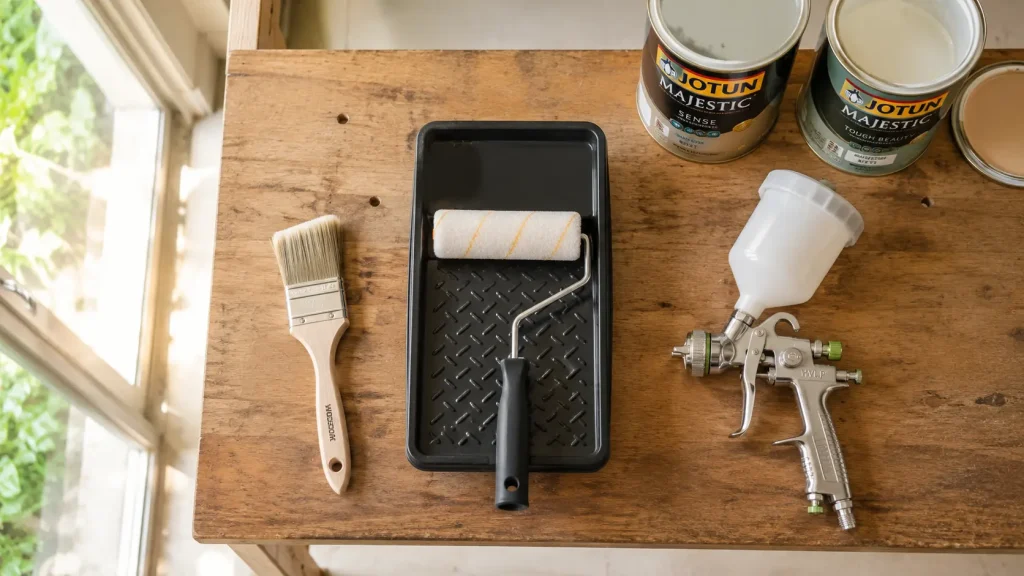
The Three Painting Tools You Need to Know
Before we go surface by surface, here’s a quick breakdown of how each tool works and what it’s built for.
Paint Brush
A brush applies paint manually, stroke by stroke. It gives you the most control and is ideal for detail work, tight corners, and areas where precision matters. Brushes come in different shapes — angled sash brushes for trim and edges, flat brushes for broader coverage.
Downside: brush marks. If you use the wrong brush or wrong technique on a large flat surface, you’ll see every stroke in the dried finish.
Paint Roller
A roller holds paint in a textured sleeve and applies it in a rolling motion across larger surfaces. It’s faster than a brush, creates a more even coat on flat areas, and is the go-to tool for interior walls and ceilings.
Roller nap (thickness) matters: thin sleeves (6mm–10mm) give smoother finishes on flat walls; thicker naps (15mm–18mm) work better on textured or rough surfaces.
Spray Gun
A spray gun atomises paint into a fine mist for a smooth, even coat with no brush marks or roller texture. It’s the fastest method for large areas, and it’s what professionals use for a flawless factory-like finish on furniture, cabinets, and exterior surfaces.
Downside: overspray, masking time, and clean-up. If the surrounding area isn’t protected properly, you’ll be cleaning dried paint off windows and floors for hours.
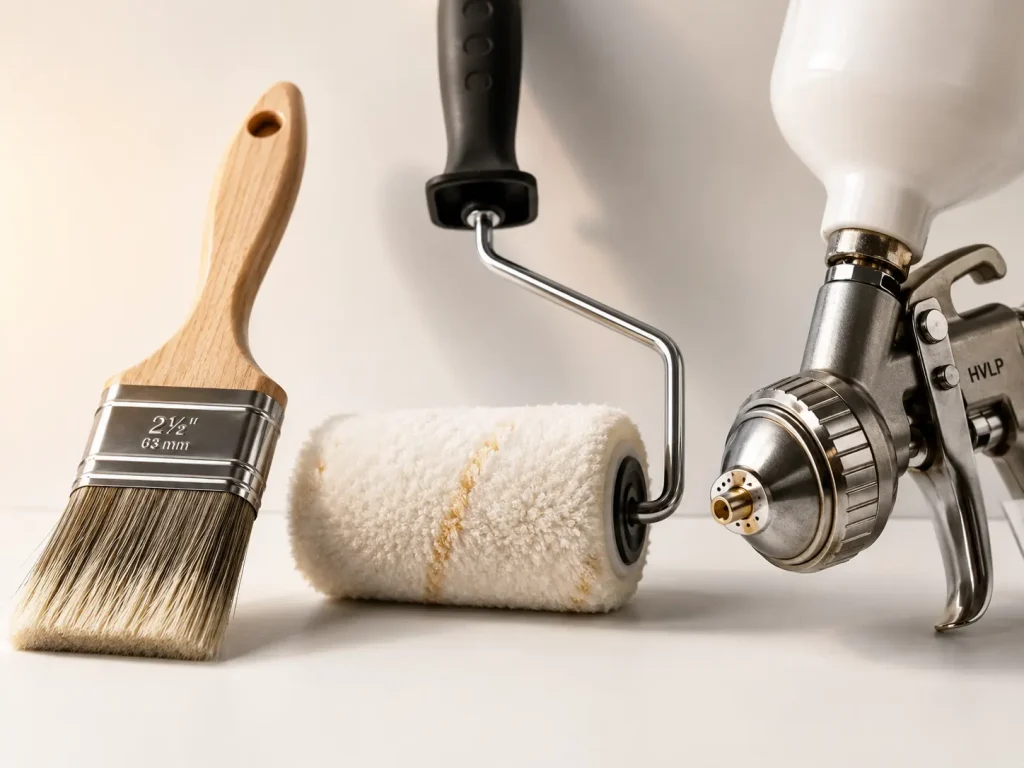
When to Use a Paint Brush
Use a brush when control matters more than speed.
Best for:
- Corners and edges — Before rolling a wall, use an angled brush to “cut in” along the ceiling, skirting, and corners. Rollers can’t reach these spots cleanly.
- Wood trim and door frames — Brushes let you work with the grain of the wood and avoid painting adjacent surfaces.
- Furniture and detailed surfaces — For ornate cabinets, decorative mouldings, or rattan furniture, a brush reaches into grooves that a roller or spray gun can’t.
- Small touch-ups — Touching up a scuff or a small damaged patch with a brush keeps things neat without hauling out a full setup.
Tip for Malaysian homes: In humid conditions, use a synthetic bristle brush (nylon or polyester) rather than natural bristle. Natural bristles absorb moisture and lose their shape in high humidity — a problem in any Malaysian home.
When to Use a Paint Roller
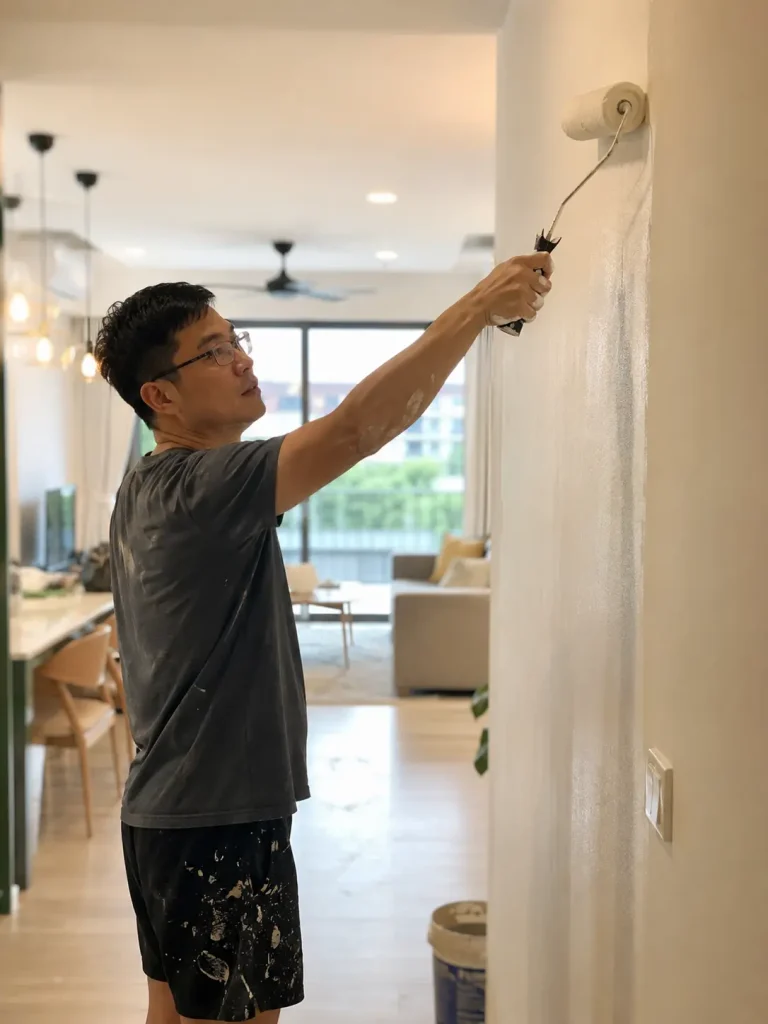
Use a roller when you want speed and evenness on a large, flat surface.
Best for:
- Interior walls — The roller’s standard use case. A roller covers a wall up to five times faster than a brush and leaves a consistent texture when used correctly.
- Ceilings — Use an extension pole on your roller to avoid the awkward ladder work. A thick nap handles any ceiling texture.
- Concrete floors and car porches — A thick-nap roller handles rough concrete well and covers large areas fast.
- Feature walls — Whether you’re rolling on a solid colour or a textured paint, rollers give you even coverage across the whole surface.
Cut in first, then roll. Always brush the edges and corners before rolling the main field. This order prevents you from going
When to Use a Spray Gun
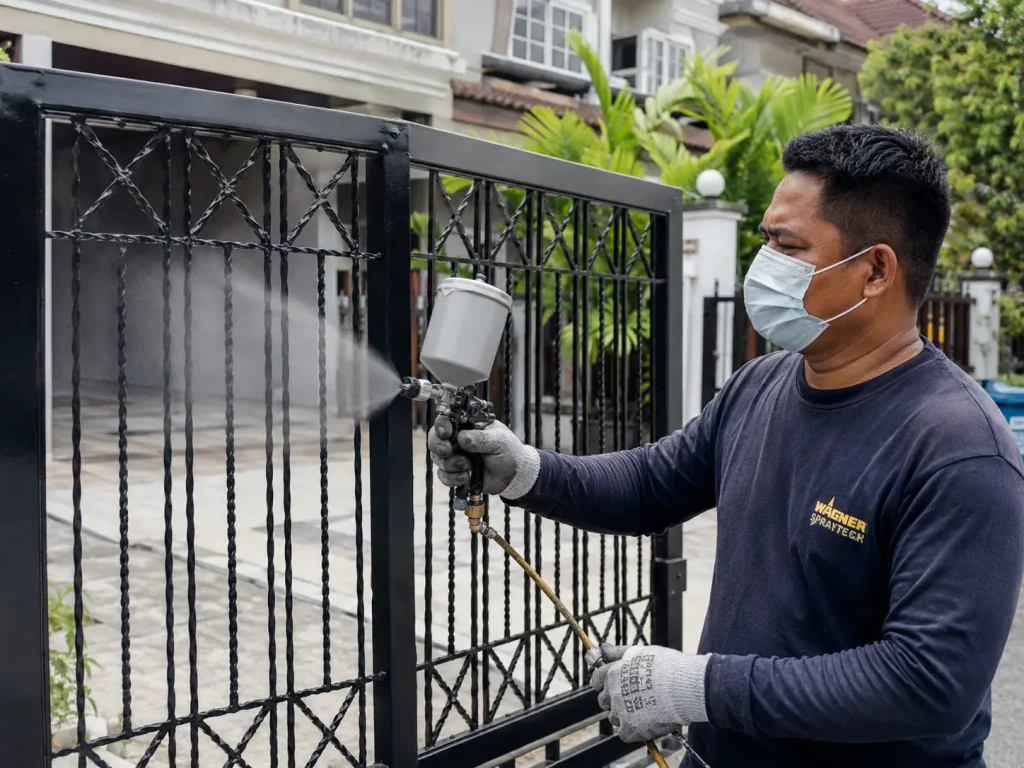
Use a spray gun when you want a professional-grade finish, especially on surfaces where brush and roller marks are unacceptable.
Best for:
- Kitchen cabinets and furniture — Spray gives a smooth, furniture-factory finish that brushes and rollers simply can’t match.
- Metal gates, grilles, and fences — Spray reaches into the lattice and open sections of metal gates that a brush would take hours to cover properly.
- Large exterior walls — For big repaints of a whole terrace house or semi-D facade, a spray gun dramatically cuts down time.
- Lacquers and enamels — These thin coatings are designed to be sprayed, not brushed. Brushing them often leads to runs and uneven texture.
Important: Proper masking is non-negotiable when spraying. Cover windows, tiles, hardware, and anything you don’t want painted. In a Malaysian home, this also means protecting marble or terrazzo floors — overspray is nearly impossible to remove from porous stone.
Surface-by-Surface Guide
| Surface | Best Tool | Why |
|---|---|---|
| Interior walls | Roller + brush for edges | Fast, even, consistent texture |
| Ceiling | Roller with extension pole | Speed and reach |
| Wood door | Brush | Control, follows the grain |
| Door frame and trim | Brush | Precision around edges |
| Kitchen cabinets | Spray gun | Smooth finish, no brush marks |
| Metal gate / grille | Spray gun | Reaches into gaps and lattice |
| Concrete floor | Thick-nap roller | Handles rough texture at scale |
| Timber fence | Brush or spray | Brush for small sections; spray for long runs |
| Furniture (refinish) | Spray gun | Professional-quality finish |
| Textured walls | Thick-nap roller | Nap pushes paint into surface texture |
Common Mistakes That Ruin the Finish
Using the wrong tool for the job. Rolling paint onto cabinets, or spraying an interior wall without proper masking — these are the decisions that cost hours in rework.
Skipping surface prep. No painting method covers up poor prep. Sand rough surfaces before painting, fill any cracks or holes, and use the right sandpaper grit so the surface is smooth and paint-ready before you open the tin.
Skipping primer. In Malaysia’s humid climate, primer isn’t optional — especially on new plaster walls or bare wood. If you’re unsure whether you need it, read our guide on primer vs paint in Malaysia’s tropical climate before you start.
Overloading the roller. Too much paint causes drips, splatter, and uneven texture. Load the roller until the nap is coated but not dripping, then roll it across the ridged section of the tray to distribute the paint evenly.
Thick paint in the spray gun. Paint that’s too thick clogs the nozzle and creates an uneven fan pattern. Always dilute to the manufacturer’s recommendation and test on cardboard before spraying the actual surface.
Not cutting in before rolling. If you roll the field first and then try to brush the edges, your brush will drag across a tacky rolled surface and ruin the finish.
Which Tool Should You Buy First?
If you’re building a basic toolkit for home repainting:
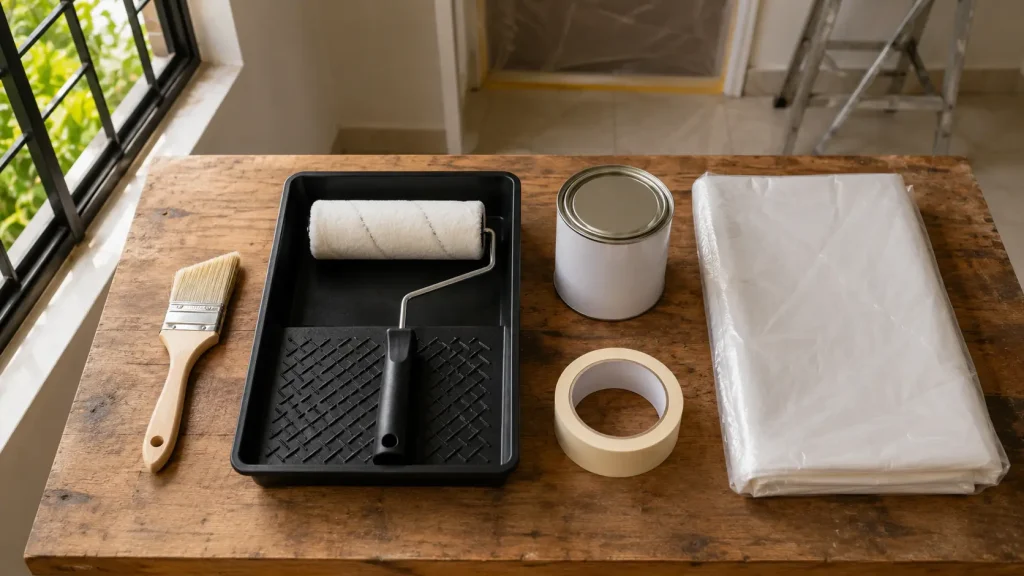
- Start with a brush set — an angled sash brush and a 3-inch flat brush cover most jobs. Low-cost and essential.
- Add a roller — a 9-inch roller frame with sleeve replacements in 6mm and 12mm nap handles most interior wall work.
- Get a spray gun later — a basic HVLP spray gun is worthwhile if you plan to refinish furniture, repaint gates, or tackle exterior walls. But it’s not a beginner’s first tool.
Total cost for a solid starter set: under RM150 for brush and roller. A decent HVLP spray gun starts from around RM200–RM400 depending on the model.
The Bottom Line
Brush vs roller vs spray painting isn’t a debate with one winner — it’s a decision that depends on the surface, the finish quality you need, and how much time you have. Use a brush for control and detail, a roller for speed on large flat surfaces, and a spray gun for a professional finish on complex shapes and furniture.
Get the prep right first. The best paint and the right tool still can’t fix a wall that wasn’t properly sanded, filled, and primed. If your paint keeps peeling after every repaint, the surface is likely the real problem — read our guide on why paint peels on Malaysian walls to find out what’s actually going wrong before you start over again.