

Your painter hands you a quote. It lists primer, undercoat, and two coats of topcoat — and suddenly the cost is RM800 more than you expected. So you ask: “Can we skip the primer?”
It’s a fair question. Primer looks like thin, ugly paint. It adds time. It adds money. And if you’re repainting a wall that already has a decent coat of paint on it, it’s tempting to assume you can skip straight to the colour you actually want.
But Malaysia’s climate doesn’t forgive shortcuts the way a drier climate might. Here’s the honest answer on whether you actually need primer — and when you genuinely don’t.
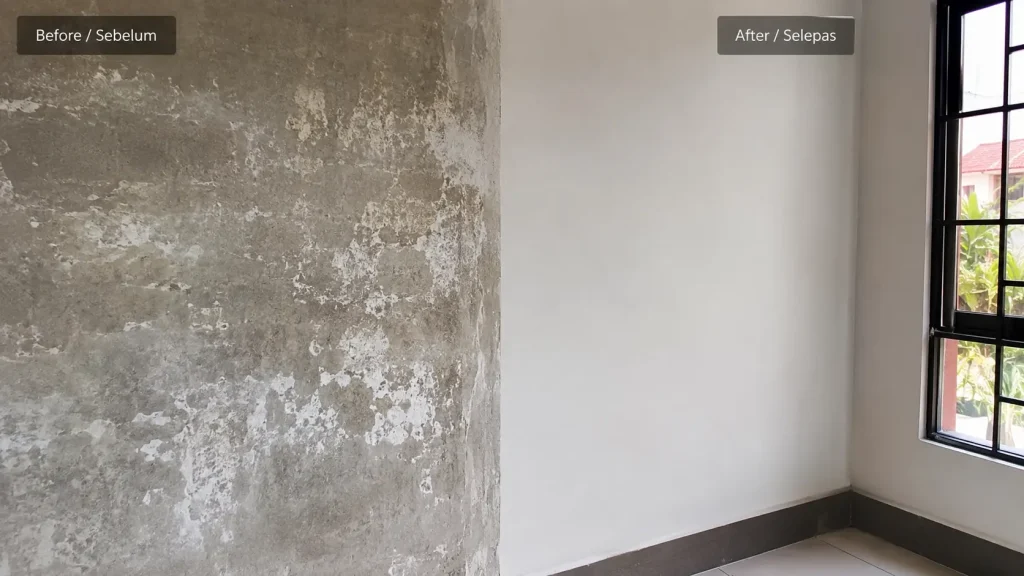
What Primer Actually Does (It’s Not Just Thin Paint)
Most people assume primer is a cheaper version of paint — something contractors use to pad a quote. It’s not.
Primer has a fundamentally different job. Paint is designed to deliver colour and a protective film. Primer is designed to create a stable base that paint can grip onto.
Specifically, a good primer does three things:
- Seals the surface — stopping the wall from absorbing too much paint, which wastes product and leaves patchy results
- Blocks alkalinity — neutralising the high pH in new cement walls that would otherwise cause the paint to break down prematurely
- Improves adhesion — giving the topcoat something to bond to, so it doesn’t peel, flake, or bubble over time
That third point matters especially in Malaysia. In a hot, humid climate, walls expand and contract with temperature and moisture changes throughout the day. Paint that isn’t properly bonded has far less tolerance for that movement.
Why Malaysia’s Climate Makes This More Important
In cooler, drier climates, getting away with skipping primer is more plausible. The walls stay relatively stable. Moisture isn’t being absorbed and released every few hours.
In Malaysia, you’re dealing with:
- High ambient humidity — walls absorb atmospheric moisture, especially in poorly ventilated spaces
- Heavy monsoon rain — exterior walls face relentless water exposure for months at a time
- Intense UV exposure — direct sunlight degrades paint film faster, especially if adhesion was weak to start
- New cement that’s highly alkaline — freshly plastered or rendered walls have a high pH that actively attacks paint from underneath
The result? Walls that weren’t primed properly tend to show peeling, bubbling, and flaking far earlier than they should. If you’ve ever wondered why paint keeps peeling on Malaysian walls, skipping or cutting corners on primer is one of the most common causes.
So Do You Actually Need Primer? The Honest Answer
It depends on the situation. Not every paint job needs a separate primer coat — but in Malaysia, more scenarios require it than most homeowners expect.
New walls: Yes, always
Freshly plastered or rendered walls are highly alkaline. Applying paint directly over new cement without an alkali-resistant primer is one of the most reliable ways to guarantee early paint failure. The alkali eats through the paint binder, and within a year or two, you’ll see chalking, flaking, and peeling.
For new walls: always prime, always use an alkali-resistant formula.
Repainting over sound, existing paint: Sometimes no
If the existing paint is in good condition — no peeling, no stains, no major colour change planned — and you’re using a quality topcoat on a similar colour, you can sometimes skip primer. A light sand and clean is often sufficient.
That said, even in this scenario, a quick coat of sealer is cheap insurance against wasted topcoat.
Peeling, stained, or damaged walls: Yes
If the existing paint is peeling, bubbling, or badly stained, applying primer over a cleaned and repaired surface is non-negotiable. Going straight to topcoat over a compromised surface is guaranteed to fail.
Before priming, you’ll also want to fill any cracks or holes properly so the surface is smooth and sound before any paint goes on.
Exterior walls: Almost always yes
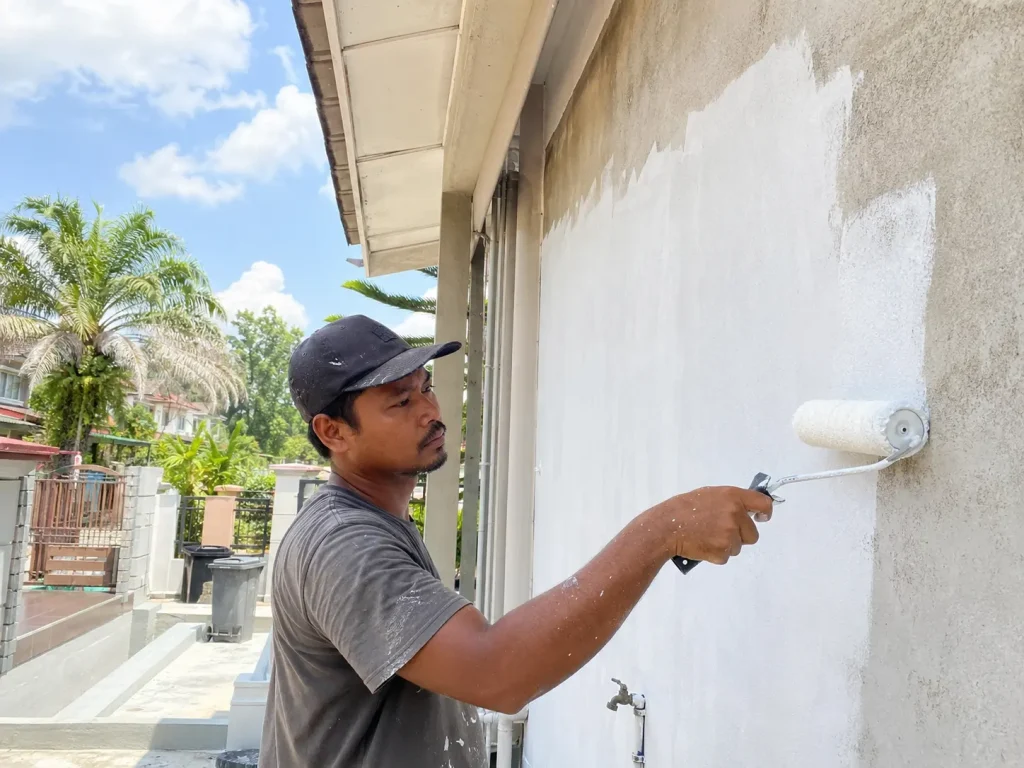
Malaysia’s exterior walls face the full force of the climate — rain, UV, and daily temperature swings. An exterior primer gives the topcoat the foundation it needs to last. Skipping it on exterior surfaces is a false economy.
Switching to a dramatically different colour: Yes
Going from dark to light, or covering a stain? A stain-blocking primer stops the old colour bleeding through and saves you from needing four or five topcoats to get an even result.
Types of Primer for Malaysian Homes
Not all primers do the same job. Choosing the wrong one is almost as bad as skipping it entirely.
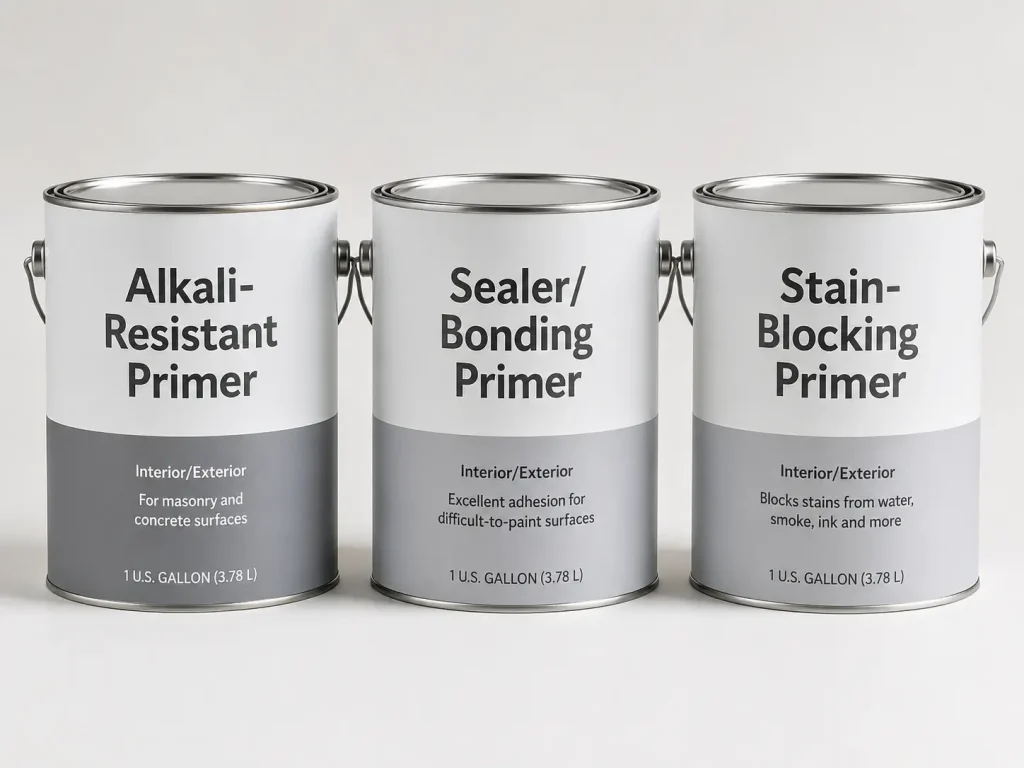
Alkali-Resistant Primer
The most important primer for Malaysian homes. Use this on any new cement, concrete, or plaster wall — interior or exterior. It neutralises the alkaline surface before topcoat is applied.
Most major paint brands in Malaysia (Nippon, Dulux, Jotun) produce alkali-resistant primers, and they are typically clearly labelled.
Water-Based Sealer / Bonding Primer
Use this when you’re painting over an older surface that’s porous, chalky, or slightly loose. It seeps into the surface, consolidates loose material, and gives the topcoat something to grip.
Stain-Blocking Primer
For covering stains from water damage, smoke, or mould before repainting. Regular primer won’t reliably block these — a dedicated stain-blocking formula will.
Moisture-Resistant Primer
For bathrooms, kitchens, laundry areas, and any surface regularly exposed to steam or condensation. Worth considering in Malaysia even in internal spaces, given the general humidity.
The Real Cost of Skipping Primer
Skipping primer saves you perhaps RM150–RM350 on the material, and maybe half a day of labour. But when the paint starts peeling eighteen months later, you’re not paying for a touch-up — you’re paying for a full repaint.
In practice:
- A properly primed exterior repaint should last 5–8 years in Malaysian conditions
- An unprimed repaint may start showing problems in 12–24 months
The maths rarely works in favour of skipping.
There’s also the issue of paint consumption. Unprimed walls are porous — they drink topcoat. A wall that should need two coats may need three or four to achieve even coverage, cancelling out any saving from skipping primer in the first place.
What About Paint-and-Primer-in-One Products?
You’ve probably seen these on the shelves — a single tin that claims to combine primer and topcoat in one step.
They can work, but with caveats:
- They’re most suitable for repainting over existing, sound paintwork in good condition
- They are generally not a substitute for dedicated alkali-resistant primer on new cement walls
- In high-humidity or high-exposure situations — exterior walls, bathrooms — a dedicated primer coat is still the safer choice
Think of them as a convenient option for low-risk repaints, not a universal shortcut.
The Right Order Before You Paint
Whether you’re priming or not, proper surface preparation is what actually determines how long the finish lasts. Here’s the sequence:
- Clean the surface — remove dust, grease, mould, and any loose paint
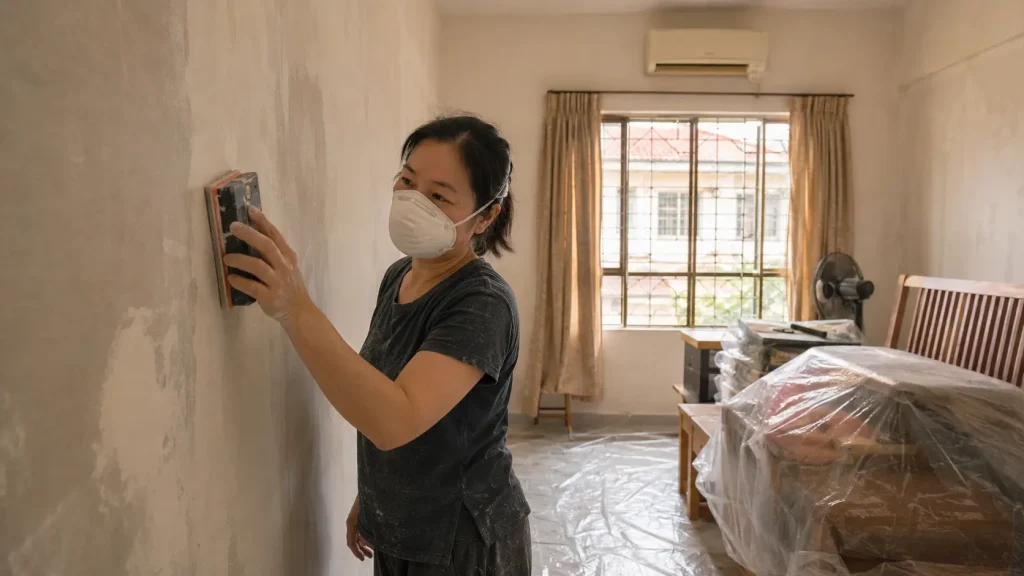
- Sand where needed — rough surfaces, glossy paint, or high-traffic areas benefit from a light sand before painting (use the right sandpaper grit — 120–180 grit is typically right for wall prep)
- Fill cracks and holes — let filler dry fully before continuing
- Apply primer — one coat is usually enough on a sound surface; two on bare masonry or heavily stained walls
- Allow to cure — don’t rush. Most primers need 4–6 hours before topcoat in Malaysian conditions; check the tin
- Apply topcoat — two coats for full colour coverage and protection
When You Genuinely Don’t Need Primer
To be fair to the sceptics: there are situations where skipping primer is reasonable.
- Repainting a wall that already has a sound, well-bonded existing coat in a similar colour
- Using a high-quality paint-and-primer-in-one product on an interior wall in good condition
- Small touch-ups on an area that has been properly scuff-sanded first
Even in these cases, it’s worth asking your painter what they recommend and why. A good painter will tell you honestly. One who pushes back hard against priming may be cutting corners — and one who insists on primer where it truly isn’t necessary may be padding the job. Knowing the logic helps you have that conversation with confidence.
The Bottom Line
In Malaysia’s tropical climate, primer is not an optional extra for most paint jobs — it’s what makes the paint last. On new walls, exterior surfaces, or anything that’s peeling or stained, skip it and you’re likely repainting within two years.
There are scenarios where a dedicated primer coat isn’t strictly necessary. The key is knowing which situation you’re in — and not letting “it costs extra” be the only factor in that decision.
If you’re unsure, the default in a humid, high-UV climate like Malaysia should always be: prime first.
Have a paint project coming up and not sure where to start? FixRight breaks down the steps so you can make informed decisions — whether you’re doing it yourself or briefing a contractor.