

You repaint the wall. Six months later, it’s peeling again.
If this sounds familiar, you’re not imagining things — and you’re definitely not alone. Paint peeling is one of the most common complaints from Malaysian homeowners, and it rarely has just one cause. Malaysia’s combination of relentless humidity, intense UV, and sudden monsoon downpours creates conditions that are genuinely brutal on wall surfaces.
The good news: once you understand why it’s happening, the fix is straightforward — and it will actually last.
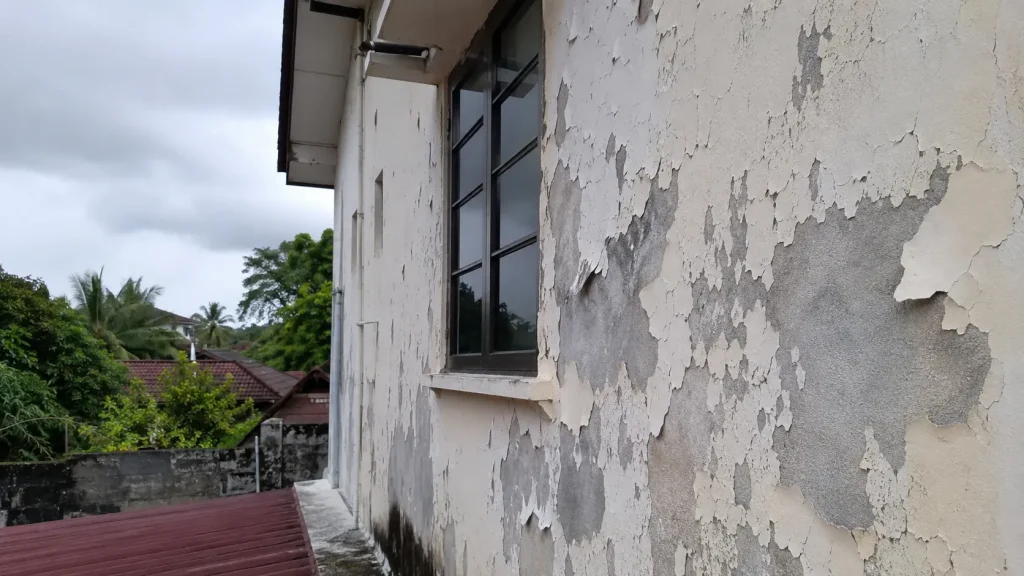
Why Paint Keeps Peeling in Malaysia
1. Humidity Is Working Against You Every Day
Malaysia’s average relative humidity sits between 70% and 90% year-round. That’s not just uncomfortable for people — it’s actively hostile to paint films.
When moisture seeps through a wall (from rain, condensation, or rising damp), it builds up behind the paint layer. As temperature rises during the day, that trapped moisture expands and pushes the paint outward, causing it to blister, bubble, and eventually peel off in sheets.
This is especially common on:
- North and east-facing walls that stay damp longer after rain
- Shaded walls where surfaces don’t dry out between rain episodes
- Interior walls near bathrooms or kitchens with poor ventilation
2. UV Exposure Degrades the Paint Film
The equatorial sun is unforgiving. Even when it’s not raining, intense UV radiation breaks down the binders in paint — the resins that hold the pigment together and bond it to the wall. Over time, the paint becomes brittle, loses flexibility, and cracks under the daily cycle of heat (expansion) and cooler nights (contraction).
You’ll recognise UV damage by the chalky, powdery residue you can rub off the surface before the peeling starts. On south and west-facing walls, this can happen within a year of painting if you’re using the wrong product.
3. The Wall Wasn’t Prepared Properly
This is the most common DIY mistake — and it’s the reason many repaints fail within months.
Paint needs a clean, dry, sound surface to bond to. If any of these conditions are missing, the bond fails:
- Old peeling paint left on the wall — new paint over loose paint will always fail
- Dusty or dirty surfaces — paint simply cannot grip
- Wet or damp walls — moisture underneath breaks the adhesion immediately
- Efflorescence (white salt deposits) — common on new or weathered concrete walls; the salt pushes through and lifts the paint
4. Alkaline Walls and New Cement
New cement and plaster walls are highly alkaline — and most standard paints can’t handle that. If you paint directly onto a freshly plastered wall without letting it cure (usually 28 days minimum) or without applying an alkali-resistant primer, the alkalinity saponifies the paint, breaking it down from underneath.
This is why freshly-built houses often develop peeling paint problems within the first year.
5. Using Interior Paint on Exterior Surfaces
Interior and exterior paints are formulated differently. Exterior paints contain UV stabilisers, fungicides, and flexible resins designed to handle rain, sun, and temperature swings. Interior paints have none of that.
Using interior paint outside — or using a cheap, low-grade paint anywhere on an exterior surface in Malaysia — is a short route to early peeling.
6. Poor Ventilation in Enclosed Spaces
Inside the home, peeling often happens in bathrooms, wet kitchens, or areas with poor airflow. Steam and condensation build up on walls, and if there’s no moisture barrier or the paint used isn’t moisture-resistant, the same blistering-and-peeling cycle begins indoors.
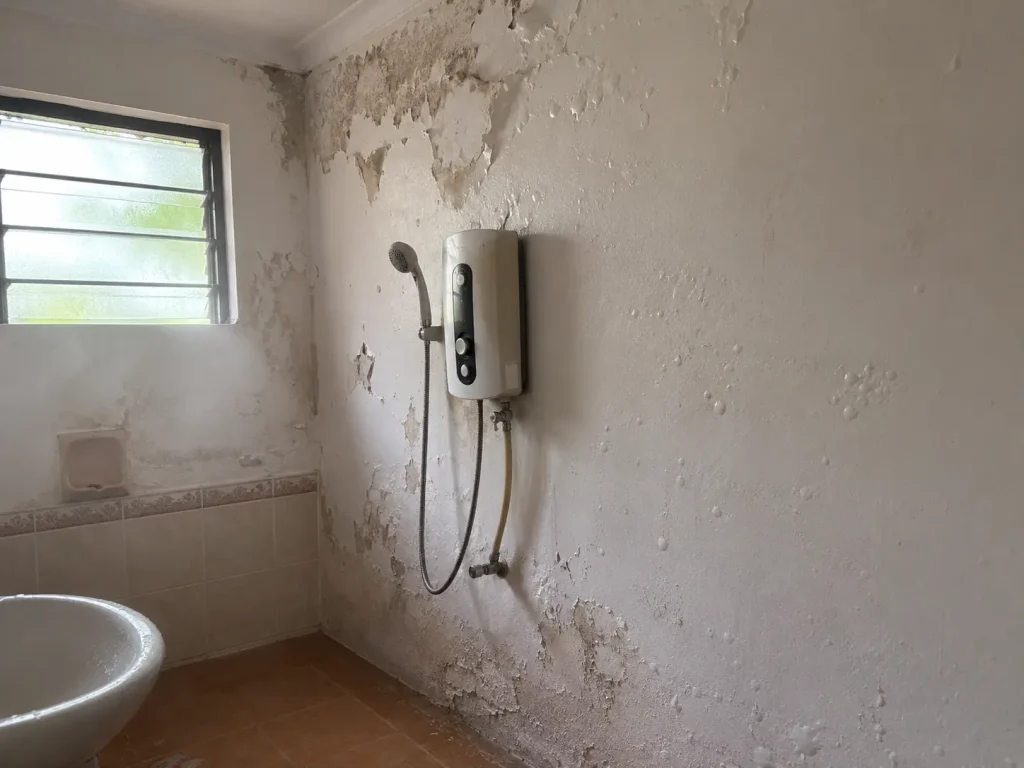
How to Tell What’s Causing Your Peeling
Before you pick up a paintbrush, spend five minutes diagnosing the problem. Different causes need different fixes.
| What You See | Likely Cause |
|---|---|
| Paint peeling in sheets, damp patch behind it | Water infiltration / rising damp |
| Bubbles and blisters before peeling | Moisture trapped beneath the surface |
| Chalky powder, then cracking and peeling | UV degradation |
| White crusty deposits under peeling paint | Efflorescence from alkaline cement |
| Peeling only at edges or joints | Surface not properly cleaned or bonded |
| Peeling near bathroom, kitchen, or AC unit | Condensation / poor ventilation |
If you’re seeing a damp patch or water stain behind the peeling, fix the source of water first — waterproofing or leak repair has to come before repainting, or the problem will simply repeat.
How to Fix Peeling Paint: Step by Step
Step 1 — Remove All Loose and Peeling Paint
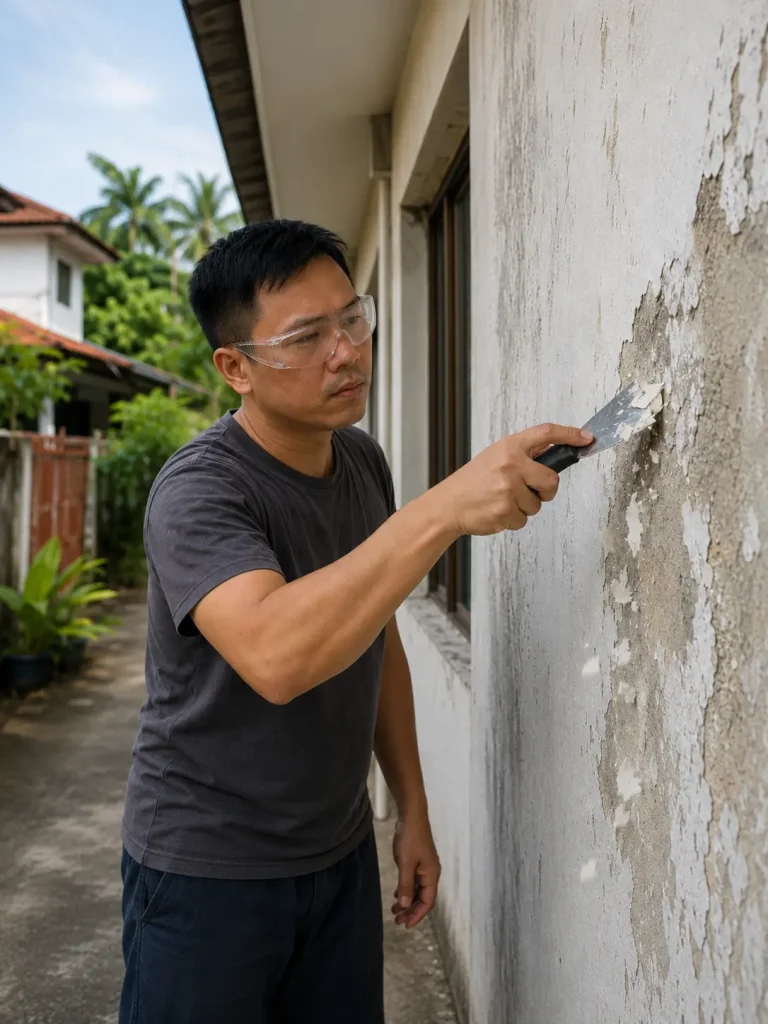
Use a metal scraper or paint scraper to remove every bit of loose, peeling, or flaking paint from the affected area. Don’t just scrape the obvious bits — press around the edges to find how far the weak bonding extends. Any paint that moves or feels hollow needs to come off.
If you leave loose paint underneath, the new coat will fail in the same spots within months.
Step 2 — Sand the Surface Smooth
Once you’ve scraped back to a sound surface, sand the edges of the repair area so there’s no sharp step where the old paint ends. This feathering ensures the new paint blends in without a visible edge line.
For this job, choosing the right sandpaper grit matters — use 80–120 grit to smooth rough edges and surface irregularities, then finish with 180–220 grit for a fine surface ready for primer. Wipe off all dust with a damp cloth and let the wall dry completely.
Step 3 — Fix Cracks and Holes
Inspect the bare surface for cracks, holes, or gaps. These need to be filled before priming — not after. Painting over unfilled cracks just seals them temporarily; they’ll open again and the paint will crack with them.
For hairline cracks and small holes in rendered or plastered walls, wall filler, putty, and acrylic sealant each have different uses — the right choice depends on the type and size of the crack. Once filled, allow full drying time before moving on.
Step 4 — Apply the Right Primer
This is the step most people skip — and skipping it is the reason the paint peels again.
- For exterior walls: use a water-based alkali-resistant primer. This neutralises the alkalinity of cement surfaces and gives the topcoat something solid to bond to.
- For damp-prone areas: use a moisture-barrier or anti-humidity primer before the topcoat.
- For walls with efflorescence: treat the white deposits with a diluted acid wash first, rinse thoroughly, let dry completely, then prime.
- For interior surfaces in bathrooms: use a primer formulated for wet areas.
Allow the primer to cure fully — usually 4 to 6 hours in Malaysian conditions, but check the label.
Step 5 — Apply the Topcoat
Apply your paint in two coats, allowing full drying time between them. Don’t rush this. Applying a second coat over a wet first coat traps moisture and — you guessed it — causes peeling.
Use a brush for edges and corners, and a roller for large flat areas. Work in the early morning or late afternoon when it’s not raining and direct sun isn’t heating the wall surface (hot surfaces cause paint to dry too fast and bond poorly).
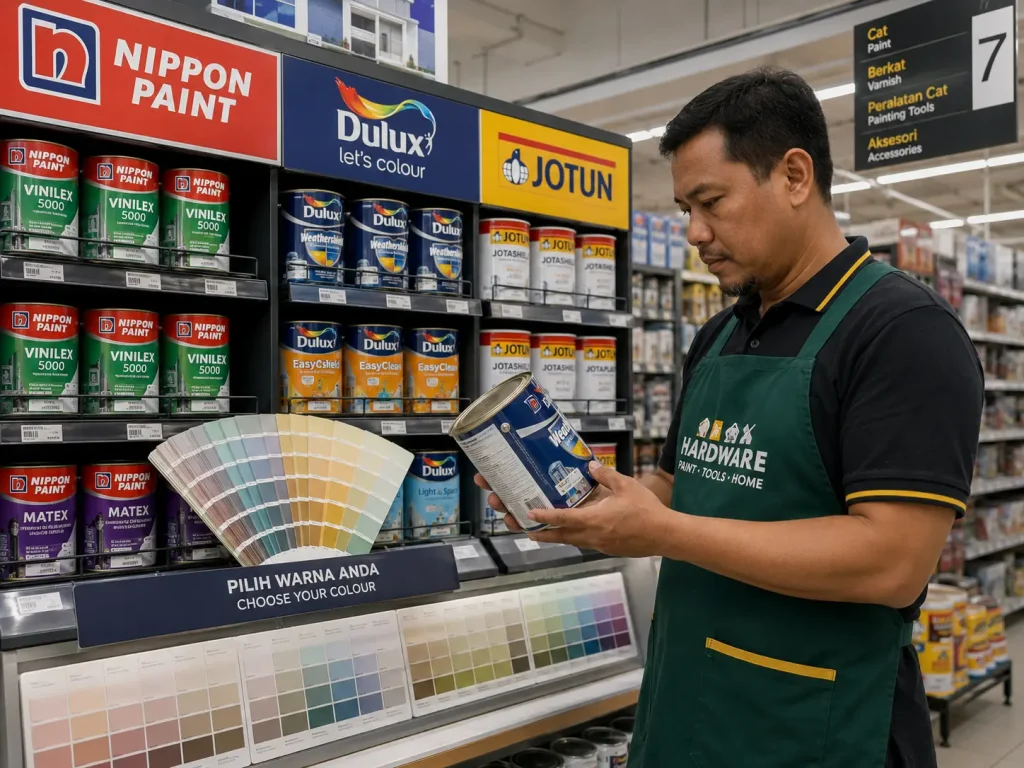
Choosing the Right Paint for Malaysia
Not all paints are equal in a tropical climate. Here’s what to look for when buying paint for Malaysian conditions:
For exterior walls:
- Choose a paint with UV protection — look for “weather shield”, “weatherguard”, or “UV-resistant” on the label
- Opt for elastomeric or flexible paint where possible — these expand and contract with temperature changes without cracking
- Look for anti-fungal and anti-algae formulas — green or black mould and algae growth is common on shaded Malaysian walls and will lift paint over time
For bathrooms and wet kitchens:
- Use paints specifically labelled moisture-resistant or anti-humidity
- Avoid flat or matte finishes in wet areas — semi-gloss or satin surfaces resist moisture better and are easier to wipe clean
For new walls:
- Always check if the cement has cured for at least 28 days
- Never skip the alkali-resistant primer
Brand note: Several established brands — Nippon Paint, Dulux, and Jotun — offer Malaysia-specific exterior lines formulated for tropical climates. These aren’t the cheapest options on the shelf, but they last significantly longer than economy alternatives.
How to Prevent Paint from Peeling Again
Once you’ve fixed the problem, a few habits will protect your walls long-term:
Check for water entry points annually. The most common culprit behind recurring peeling is a hairline crack in the parapet, window frame seal, or roof junction that lets rainwater into the wall. Walk around your home after heavy rain and look for wet patches.
Don’t paint on a damp wall or before rain. Check the weather forecast before you start. Walls need at least 24 hours of dry weather after rain to dry out properly before painting.
Use quality paint and don’t thin it too much. Some painters thin paint heavily to cover more area faster. This weakens the paint film significantly. Follow the manufacturer’s dilution instructions.
Clean walls before repainting. A simple wash-down to remove dust, dirt, and any algae growth before each repaint makes a real difference to how well the new coat bonds.
Repaint on a regular cycle. Even the best exterior paint in Malaysia has a lifespan — typically 5 to 8 years for quality products in normal conditions, less for walls with heavy sun or rain exposure. Letting it go too long means you’re repainting over a degraded surface rather than a sound one.
The Short Version
Paint peeling in Malaysia comes down to three things: moisture getting in, UV breaking the paint film down, and a surface that wasn’t properly prepared before painting. Fix all three and your repaint will last.
The steps aren’t complicated — scrape, sand, fill, prime, paint — but each one matters. Cut corners on surface prep or skip the primer and you’ll be back at the same wall within a year.
If your walls are peeling repeatedly in the same spots, look beyond the paint. A persistent damp patch, a leaking roof junction, or rising damp at the base of the wall won’t be solved by any amount of repainting until the source of moisture is fixed first.
Get the prep right, choose the right products, and a quality exterior repaint in Malaysia should give you five to eight years of clean, solid colour before you need to think about it again.